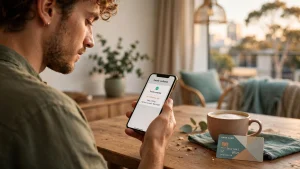
See how AUD exchange funding, casino deposits, wagering requirements and SOL volatility affect the value and risks of casino play.

Funding an offshore casino with SOL is a two-part transfer: AUD first goes to an Australian crypto exchange, then the SOL you buy is sent to the wallet address shown by the casino. Most Solana casinos do not take AUD directly by bank transfer or card. The exchange is therefore the conversion point between Australian dollars and the asset used for the deposit.
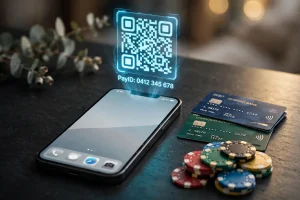
Australian exchanges including Swyftx, CoinSpot and Coinbase AU support AUD deposits by PayID or bank transfer. The exchange may require you to complete KYC checks before you can fund an account or trade. On-ramp services that convert AUD into cryptocurrency are subject to KYC and anti-money-laundering requirements, so allow for the exchange’s own account and verification steps rather than assuming you can buy and send SOL immediately.
Once AUD is available in the exchange account, you can use it to buy SOL. The amount of SOL credited depends on the price at the time of the trade and any costs displayed by the exchange. That is separate from the casino’s deposit minimum: an exchange balance is not yet a casino balance, and buying SOL does not send it anywhere automatically.
When choosing a Solana casino in Australia for 2026, you should check the available licensing and payment details before deciding whether a site fits your needs. Use these brief verdicts as a starting point for your own checks.
JustCasino
JustCasino is listed with a Curacao Gaming Control Board licence.
Playfina Casino
Playfina Casino is listed under Curacao eGaming through Hollycorn N.V., which has held the licence since 2017. Its minimum deposit is A$20–30, depending on the offer.
LevelUp Casino
LevelUp Casino is listed under Curacao eGaming licence OGL/2023/174/0082, held by Dama N.V. The stated minimum deposit is A$15.
Roby Casino
Roby Casino is listed under Curacao eGaming through Roby Games Ltd.
Golden Pokies
Golden Pokies is listed with a Curacao licence.
MrPacho
MrPacho lists crypto payouts at 30–120 minutes and fiat payouts at 24–72 hours. Its minimum deposit is A$30.
House of Pokies
House of Pokies lists an international iGaming licence, though the jurisdiction is not named in the available information. PayID payouts are stated as taking 1–24 hours; the minimum deposit is A$30, or A$10 for PayID.
DragonSlots Casino
DragonSlots Casino is listed under the Curacao Gaming Authority through Jumpman Gaming Ltd.
LuckyVibe
LuckyVibe is listed with Curacao Gaming Control Board licence OGL/2023/176/0095, held by Hollycorn N.V.
Lucky Dreams
Lucky Dreams is listed with a Curacao licence. Its minimum deposit is A$20 when using POLi.
The next step is to open the casino’s deposit area and select SOL. The casino should display a destination address for the deposit. Copy that address into the withdrawal or send form on the exchange, then check that the selected asset and network are compatible with the deposit instructions. A wallet address is not a general-purpose destination for every token or network. If the exchange is configured to send something other than native SOL over the required network, the casino may not credit the deposit.
Treat the address as exact. SOL transfers are irreversible; if you send funds to the wrong address, they can be lost permanently. Compare the address shown by the casino with the one entered in the exchange before approving the transaction. Do not rely on a previous address or on a contact saved for a different destination. If the casino provides deposit instructions beyond the address, follow those instructions rather than assuming every account uses an identical process.
After sending, the exchange marks the transfer as submitted, and the casino’s wallet system must recognise the incoming transaction before the balance appears in your account. Those are distinct stages: a send confirmation on the exchange does not itself prove the casino has credited the funds. Keep the transaction details so you can identify the transfer if you need to query a missing credit. Avoid sending more until you have resolved an uncertain or uncredited deposit.
Minimums matter before you make the transfer. A specialist affiliate review reports minimum SOL deposits in the range of 0.01 to 0.1 SOL, equivalent to AUD $2.80–$28 at April 2026 prices. This is a reported range, not a fixed rule for every casino, and the AUD equivalent changes with SOL’s price. Check the deposit screen for the specific minimum that applies to the account you intend to fund. Sending less than the stated threshold may mean the deposit is not credited as expected.
The amount you send also needs to account for the exchange’s withdrawal instructions and the casino’s stated deposit requirement. Do not assume that the SOL figure you buy is automatically the figure that will arrive: check the send amount and any displayed costs before confirming. If the amount available to send is below the casino’s minimum, buying or transferring a smaller quantity may not complete the intended funding step. Confirm the threshold first, then prepare the transfer.
A VPN does not make the funding route safer. Using one may result in an account being seized and funds being lost. Offshore casinos are prohibited under the Interactive Gambling Act 2001 from providing online casino games to Australian residents; using SOL does not change that. Australian players are not directly penalised under the Act, but that does not make an offshore account legally safe or give you Australian consumer recourse if funds are withheld.
Funding a Casino
Deposit AUD
Send Australian dollars to a crypto exchange using PayID or bank transfer and complete KYC checks.
Buy SOL
Use your AUD balance on the exchange to purchase Solana (SOL).
Get Casino Address
Open the casino's deposit area, select SOL, and copy the provided destination address.
Transfer Assets
Paste the address into the exchange's withdrawal form, verify the network, and send the SOL.
Confirm Credit
Wait for the casino's wallet system to recognise the transaction and update your account balance.
In practical terms, keep the route clear: deposit AUD with an Australian exchange, buy SOL, obtain the casino’s current SOL deposit address, verify the asset and network, and send only after checking the minimum and destination. Do not treat an exchange purchase as a casino deposit until the transfer has been made and the casino balance reflects it.
A comparison is useful only when each claim can be checked against the terms that govern your account. Separate what a casino says about its games and payment rules from what can be independently verified. A polished page, a badge or a claim of fast payouts is not evidence by itself.
Start by identifying the regulator and jurisdiction named in a licence claim. Then check whether the regulator’s own records confirm that the operator is licensed, and whether the licence applies to the casino service rather than to a different business or product. An image of a certificate without a verifiable record is not enough to establish the claim.
A foreign licence does not authorise an operator to provide online casino games to people in Australia. The Interactive Gambling Act 2001 prohibits offshore operators from offering those services to Australian residents. A licence displayed by an offshore casino therefore should not be described as Australian approval or as making play legally safe for you. This distinction is about the scope of a licence, not a recommendation to use a particular platform.
RTP, or return to player, is a statistical measure associated with a game’s expected returns over extended play. It is not a promise about what you will receive in an individual session. Check whether the figure is tied to the specific game version available on the site, and whether the operator explains where the figure comes from.
Do not assume that one RTP figure applies to every game, or that a site-wide average tells you the return for a particular game. If the information is missing, unclear or presented without a way to identify the relevant game version, you cannot use it as a reliable comparison. RTP also does not establish that a game’s outcomes have been independently checked.
“Provably fair” should refer to a process you can inspect, not simply a label in promotional copy. Look for an explanation of what data is used to produce an outcome, what information is available before and after play, and how you can verify a completed result. The instructions should let you understand the check without asking you to trust a claim that the casino has made about itself.
A verification tool can help establish whether a particular result matches the stated process. It does not by itself prove that every game on the site uses that process, that the software is free of other problems, or that the operator will honour a withdrawal. Check which games the tool covers and whether its explanation is specific enough for you to follow.
Read the account and withdrawal terms for the circumstances in which KYC checks may be requested. Larger withdrawals or bonus cashouts may trigger requests for identity documents. The relevant details include what documents may be needed, how they must be submitted, and whether a check can delay access to funds. Do not assume that an account can be verified only at registration.
Check whether bonus conditions introduce additional verification steps or restrictions. If the terms say that a check can be requested without explaining the process, factor that uncertainty into your assessment. A statement that withdrawals are automated does not answer what happens if a KYC check is required.
Find the rules for withdrawal eligibility, fees, processing and any conditions attached to bonus funds. A withdrawal figure should distinguish the casino’s internal review from the time a transaction takes to move across the network. Solana confirmation speed cannot tell you when an operator will approve or send a withdrawal.
A specialist review reports processing times ranging from 5–15 minutes for automated operators to as long as 72 hours for manual processes. The same type of review reports that some casinos add withdrawal fees of 0.1% to 1% of the amount. These are reported ranges, not a guarantee about any particular casino. Processing can depend on the operator’s internal handling and network congestion, so look for terms that explain both the casino’s step and the transaction step.
Check whether the published terms state how fees are calculated, whether the amount you request can be reduced by a fee, and whether bonus conditions affect what you can withdraw. If a rule is unclear, do not treat silence as permission to withdraw without restrictions. Save a copy of the terms that apply when you deposit, since a later page may not show the same wording.
These checks concern the operator’s claims and account rules. They are separate from the mechanics of sending SOL: a technically successful transfer does not establish that a casino is authorised to serve Australians, that a game has the stated RTP, or that a withdrawal will be released on a particular schedule. Nor does a foreign licence or a verification tool remove the legal and consumer-protection risks of using an offshore casino.
The legal distinction is between owning SOL and using it to access an offshore online casino. Australians may legally buy, hold and transfer SOL. That does not make an offshore casino service lawful to provide in Australia. Under the Interactive Gambling Act 2001, overseas operators are prohibited from offering online casino games to people in Australia.
The law’s primary target is the operator, not the individual player. An Australian player is not directly penalised under the Act simply for using an offshore casino. That distinction matters, but it should not be mistaken for approval, a guarantee of access or a sign that the service is legally safe. The operator’s service remains prohibited in Australia, and the player has little protection if a dispute arises.
Legal Risks
Offshore casinos are prohibited under the Interactive Gambling Act 2001, meaning you have no legal protection or consumer recourse if funds are withheld.
The Act applies to the provision of online casino services to people located in Australia, even when the operator is based overseas and accepts SOL rather than Australian dollars. Using cryptocurrency does not change the nature of the service: the relevant issue is that an operator is offering online casino gambling to Australian residents.
This is why the phrase “Solana casino” describes a payment or network connection, not an exemption from Australian gambling law. A platform cannot avoid the Act merely by denominating bets in SOL or processing them through the Solana network. For Australian users, the same legal restriction applies to the casino service.
The Australian Communications and Media Authority (ACMA) enforces the Act. One of its enforcement tools is blocking access to unlicensed offshore gambling websites. A site that opens today may therefore become inaccessible later, or access may be disrupted without notice. A blocked website is not proof that a player has committed an offence; it reflects enforcement directed at the service.
A technical workaround does not change the operator’s legal position or create consumer protections. Using a VPN may also breach a platform’s own terms and could result in an account being seized or funds being lost. Do not treat continued access, whether direct or through a workaround, as evidence that an offshore service is authorised in Australia.
The practical risk for a player is not limited to whether a site remains reachable. If an offshore operator freezes an account or refuses to release winnings, Australian players using that service have no legal protection under Australian law. They also have no reliable recourse through Australian authorities to compel the operator to return funds. An offshore company may be outside the reach of ordinary Australian consumer remedies, leaving a player with few ways to resolve a dispute.
That exposure is separate from the legality of buying or transferring SOL. A lawful transfer of the token does not make the gambling service lawful, and it does not give the player a legal claim that Australian authorities can enforce against the casino. The fact that the Act does not directly penalise the player should therefore not be read as protection if funds are lost, an account is restricted or the platform stops operating.
For anyone assessing the legal position, the key points are straightforward: Australian law prohibits offshore operators from providing online casino games to people in Australia; ACMA can block access to unlicensed gambling websites; and a player who uses such a service should not assume Australian law will protect their balance or winnings.
A slot bonus is not automatically withdrawable cash. When a casino credits bonus funds, it can make the resulting winnings conditional on further betting with real money. The wagering requirement sets the amount of qualifying bets you must place before those winnings become eligible for withdrawal. Until the condition is met, a balance shown in your account may be available for play but still restricted from cash-out.
Wagering Calculation
To find the required turnover, multiply the bonus amount by the stated wagering multiple (e.g., a 5 SOL bonus with a 40x requirement equals 200 SOL in qualifying bets).
The calculation depends on what the requirement applies to. If it is based on the bonus alone, multiply the bonus amount by the stated wagering multiple to find the required turnover. For instance, a specialist review describes a 35x requirement on the bonus only. That wording matters: a requirement applied to the bonus plus a deposit would produce a different total, so check the calculation base in the offer terms rather than relying on the headline multiple.
A concrete calculation shows what turnover means. A specialist review gives the example of a 5 SOL bonus with a 40x requirement: you would need to place 200 SOL in qualifying bets before withdrawal. That is the total value wagered, not a demand to lose 200 SOL. The bets can return winnings, but those returns do not erase the requirement unless the terms specify how they count. Turnover therefore measures activity, not the amount you must have left in your balance.
Free spins can create a separate layer. Their winnings may be credited as bonus funds rather than cash, then locked behind their own wagering condition. A specialist review cites 50x as an example of such a separate requirement. Check whether the spin winnings have a distinct counter and whether completing one requirement also clears another; the terms may treat them as separate balances. If the credited amount is small, a large multiple can still create substantial required turnover.
Game contribution determines how much of a bet counts toward that turnover. A slot bet may count in full under the applicable terms, while a bet on another game may count only partly or not at all. If a bet contributes only a fraction, you need more total betting to reach the same qualifying amount. For slot play, confirm that the specific slot category is eligible and that the offer does not exclude particular titles. A wager that does not qualify can consume your balance without advancing the counter.
Before accepting a bonus, read the full terms for the calculation base, eligible games, contribution rules, and treatment of free-spin winnings. Then compare the required turnover with the bonus amount and the real-money balance you would need to sustain play. If you cannot meet the conditions, declining the bonus may be simpler than having winnings tied up behind a requirement you did not intend to accept.
An NFT reference and a payment option describe different things. An NFT is a digital token; a payment asset is what a platform accepts for deposits or play. Seeing “NFT” beside a Solana casino does not establish that you can pay with an NFT, use one in a game, or receive a particular benefit from holding one. Treat any claimed NFT function as a separate feature claim, not as evidence about the casino’s accepted currencies.
The practical question is which asset the payment instructions name. SOL and USDC on Solana are distinct assets, even though both can be associated with the same network. A specialist review reports that some casinos accept USDC on Solana for deposits and play as well as SOL. That does not establish that every casino supports USDC, or that USDC is interchangeable with SOL on a particular platform. Check the stated asset and network before initiating a transfer.
Attention SOL transfers are irreversible; sending funds to the wrong address or using an incompatible network can result in permanent loss of funds.
Network compatibility matters because a wallet can hold assets on different networks. If a casino specifies USDC on Solana, sending another asset or using a different network may not meet its deposit requirements. Do not infer compatibility from a logo, a general reference to “crypto,” or an NFT promotion. Follow the exact payment instructions shown for the account. SOL transfers cannot be reversed; if you send funds to the wrong address, they may be permanently lost.
An NFT may be displayed in promotional material, connected to a community, or described as part of a platform’s ecosystem. Those descriptions do not tell you whether it is accepted as a deposit, whether it changes gameplay, or whether it has any cash value. Do not treat ownership of an NFT as a substitute for checking the payment terms. If a platform makes a specific claim, look for an explanation of what action the token enables and what conditions apply. Without that detail, the claim does not answer the payment question.
Before depositing, read the cash-out terms as well as the deposit instructions. Confirm which assets can be withdrawn and whether the platform’s stated withdrawal route matches the asset and network you intend to use. A deposit option alone does not establish that every asset can be withdrawn on the same terms. Larger withdrawals or bonus cashouts may prompt KYC checks that require identification, so do not assume that a crypto balance can be released without account review.
Also account for the value risk of using SOL: its AUD price can move between deposit and withdrawal, reducing the amount your winnings are worth when converted. An NFT claim does not remove that exposure. Offshore platforms offer limited consumer protection, and Australian authorities may not provide recourse if funds are withheld or a platform closes. Using a VPN may also lead to account seizure and loss of funds; it is not a reliable way to resolve access or payment restrictions.
The useful distinction is simple: an NFT label is not a payment specification. Identify the exact asset, network and cash-out conditions before sending funds, and do not transfer anything until the instructions match your wallet.
Australian tax treatment separates the gambling result from what happens to the cryptocurrency used to obtain it. Recreational gambling winnings are generally not taxable as income. That does not mean a SOL balance or a gain connected with gambling is automatically outside the tax system: the Australian Taxation Office treats cryptocurrency as an asset for capital gains tax purposes.
When you gamble with SOL, a profit may therefore have a capital gains tax consequence. The gambling outcome and the asset outcome are distinct: one concerns whether your recreational winnings are taxable, while the other concerns the tax treatment of cryptocurrency gains. Keeping records of SOL transactions and the AUD value of relevant amounts can help you explain how funds moved and what changed in value. If you are uncertain how a particular transaction is treated, seek advice from a tax professional rather than assuming that a gambling win settles the question.
Recreational gambling winnings are generally not taxable, but the ATO treats cryptocurrency as an asset for capital gains tax purposes, meaning a profit in SOL may have tax consequences.
The distinction matters when you later convert SOL to AUD. Conversion services that move between cryptocurrency and Australian dollars are subject to KYC and anti-money-laundering requirements. Keep the records from both sides of the transaction, including exchange statements and any available gambling account history. Those records can help establish the sequence of deposits, play and conversion when preparing your tax information. The conversion itself does not turn all recreational gambling winnings into taxable income; the cryptocurrency asset treatment still needs to be considered separately.
Losses are not a general deduction against other gains simply because they arose while gambling. A specialist tax review identifies a narrow exception: losses may be offset against gains only where the player is classified as a professional gambler. That classification has a high threshold, so recreational play should not be treated as professional activity merely because it is frequent or produces a large loss. If you are considering claiming gambling losses, get individual tax advice before including them in a return.
For a SOL casino user, the practical takeaway is to track both the gambling result and the cryptocurrency movements, rather than recording only the final AUD cash-out. Keep evidence of the SOL amounts involved and their AUD values at the relevant points. This makes it easier to distinguish a recreational gambling win from a capital gain involving the asset, and to provide support if the ATO asks how you calculated the figures.
A dice game using SOL involves two separate processes: the casino records your bet, and the Solana network confirms any resulting transfer. These are related, but they are not the same operation. A quick on-chain confirmation cannot show whether the casino has accepted a bet, settled a result correctly or approved a withdrawal.
A specialist review reports that Solana transactions can confirm in about 400 milliseconds, with balances updating immediately. It also gives an average transaction fee of $0.00025 USD, a near-zero cost for an individual transfer. These figures describe network activity, not a promise about how quickly a gambling account will display a result or receive funds.
For dice play, the distinction matters when you move SOL to or from a casino wallet. A deposit transaction can be confirmed on-chain while the casino still has to recognise it and credit the account. Likewise, a withdrawal request may remain pending at the casino before any transaction is sent to Solana. Network confirmation begins only after the operator has broadcast the transfer.
The same specialist review says native SOL withdrawals on competent platforms can process within 30–60 seconds. That timing concerns the withdrawal process described by the review; it does not mean every casino releases a request within that interval. The operator’s own processing can add time, so a fast network alone cannot establish when funds will arrive.
If a casino’s balance and the blockchain appear to disagree, check whether a transaction has actually been broadcast and confirmed. A displayed account balance is an internal record; an on-chain transfer has a transaction record on Solana. The two views answer different questions, and one should not be treated as proof of the other.
This technical distinction does not change the legal position. Under the Interactive Gambling Act 2001, offshore operators are prohibited from providing online casino games to people in Australia. Using a platform is not legally safe simply because the network processes its transactions quickly. A network can confirm a transfer; it cannot authorise the service or ensure that an operator releases funds.
A wagering requirement is a turnover target, but a bet does not necessarily count in full. The game’s contribution rate determines how much of each stake is credited towards that target. Slots typically contribute 100%, while blackjack and roulette may count for only 10–20%. The same bonus can therefore require substantially more table-game betting than slot play.
For instance, if a bonus has a 40x requirement, a 5 SOL bonus calls for 200 SOL in qualifying bets when the requirement applies to the bonus. If the chosen game contributes only 10–20%, each bet advances the target by a fraction of its stake. Reaching the same credited turnover would then take five to ten times as much actual betting as at full contribution. The exact result depends on the terms attached to that bonus and the game category you use.
Contribution is only one part of the calculation. A time limit restricts how long you have to complete qualifying play. A maximum cash-out cap can limit the amount you may withdraw even if your balance grows beyond it. These conditions affect the practical value of a bonus: a large headline offer may be difficult to clear within its deadline, or its potential cash-out may be capped.
To assess an offer, work through the terms in order: identify the amount subject to wagering, calculate the credited turnover for the games you intend to play, then check the deadline and cash-out cap. A specialist review’s approach to effective value also accounts for playthrough, contribution rates, time limits and maximum cash-outs; the advertised bonus amount alone cannot show what you may be able to withdraw.
Game choice also changes exposure to the game’s own outcomes. Meeting a turnover target does not guarantee a profit, and additional betting to compensate for a low contribution rate creates more opportunity for the balance to fall before the requirement is met. High wagering requirements, such as 40x, combined with a house edge such as 4%, can make a bonus effectively negative in value.
Read the full bonus terms before depositing. Check whether particular games are excluded or contribute differently, whether the requirement applies to the bonus alone, and what happens when the deadline expires. If the terms do not make those mechanics clear, you cannot reliably estimate the bonus’s effective value.
SOL is both the asset you send and the unit in which a casino may display your balance. That creates two separate risks: a transfer can go wrong before the funds arrive, and the AUD value of the balance can change while you hold it.
A SOL transfer is irreversible. If you enter the wrong wallet address, choose an incompatible destination or send funds somewhere you do not control, the transaction cannot simply be cancelled and the SOL may be permanently lost. Check the destination address and the casino’s deposit instructions before confirming a transfer. A successful network transaction confirms that the funds reached the specified address; it does not establish that the casino will credit them or make them available for withdrawal.
The balance can also change in value against the Australian dollar. If SOL falls between deposit and cash-out, the same number of tokens may be worth less in AUD; a rise can increase its AUD value, but does not remove the risk of loss. A displayed balance in SOL therefore does not tell you what you will receive after converting it. Consider the token’s changing value when deciding how much to transfer, and do not treat a casino balance as a fixed AUD amount.
Read the cash-out terms before depositing, not after you win. Check what conditions apply to withdrawals, whether fees can be deducted, and whether bonus-related conditions could restrict a cash-out. Larger withdrawals or withdrawals involving bonus funds may trigger KYC checks that require ID verification. These are risks to account for, not confirmed policies for every platform. If you cannot meet a requested check or disagree about a withdrawal, an offshore casino may leave you with limited consumer protection and no practical recourse through Australian authorities if funds are withheld or the platform closes.
Using SOL does not make an offshore casino legally safe. The Interactive Gambling Act 2001 prohibits offshore operators from providing online casino games to people in Australia; the law targets the operator rather than directly penalising the player. That does not guarantee access to your funds. Avoid using a VPN to get around access restrictions: doing so may lead to account seizure and loss of funds.
Treat each transfer as a one-way payment and each SOL balance as exposed to exchange-rate movement. Those risks remain even when a transaction reaches its destination successfully.
“Casino Solana” describes an online casino service that uses Solana assets, such as SOL, for deposits, play or withdrawals. It is a platform or payment description, not an Australian licence category. The word “Solana” identifies the blockchain involved; it does not say whether the operator is authorised to serve people in Australia.
As of mid-2026, a specialist review reported that Australia had not developed a specific licensing framework for crypto-gambling operators. That absence does not create permission to offer online casino games here. Under the Interactive Gambling Act 2001, offshore operators are prohibited from providing real-money online casino games to Australian residents. Using cryptocurrency does not change the legal character of the service.
Keep the distinction clear: a platform may accept SOL and describe itself as a Solana casino, but those features do not confer Australian legal authorisation. Nor does being able to open a site make its use legally safe. A VPN may lead to account seizure and loss of funds, and Australian authorities do not provide recourse if an offshore operator withholds money or closes.
The payment layer also has its own limits. SOL transfers are irreversible, so sending funds to the wrong address can result in permanent loss. SOL’s AUD value can fall between deposit and withdrawal, reducing the value of winnings. Read the cash-out terms before depositing; larger withdrawals or bonus cashouts may trigger KYC checks requiring ID verification.
The useful test is therefore not whether a service uses Solana, but what that label actually describes. It tells you about the asset or network used by the platform. It does not establish that the operator may legally provide casino games to people in Australia.
Deposit AUD into an Australian exchange, buy SOL, then send it to the casino’s current SOL deposit address after checking the required network and minimum. Play once the casino credits the transfer to your account.
Australians can buy and transfer SOL, but offshore operators are prohibited from offering online casino services to Australian residents under the Interactive Gambling Act 2001. The Act targets operators, not individual players, but you have no Australian legal protection if an offshore casino withholds your funds.
Reported minimums range from 0.01 to 0.1 SOL, around AUD $2.80–$28 at April 2026 prices. Check the casino’s deposit screen for its current minimum, as the AUD value changes with SOL’s price.
Yes, some Solana casinos accept USDC on the Solana network as well as SOL. Check the casino’s deposit instructions to confirm which assets and network it supports.
For a deposit, you buy SOL on an Australian exchange and send it to the casino’s SOL address, checking the asset, network and minimum first. Withdrawals are processed by the casino to your wallet; casino processing can take 5–15 minutes when automated or up to 72 hours when handled manually.
Solana transactions confirm in about 400 milliseconds, and native SOL withdrawals typically take 30–60 seconds on competent platforms. Casino processing can add time: automated withdrawals may take 5–15 minutes, while manual ones can take up to 72 hours.