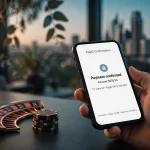
The guide covers browser access, offshore rules, payment timing, bonus wagering terms, game conditions and responsible-gambling controls.

On a phone, access to an online casino generally starts in a web browser rather than an app store. You open the casino’s website, sign in to your account and use the mobile version of its pages. Casinos that accept Australian players commonly provide browser access or a Progressive Web App (PWA), while dedicated casino apps are rarely listed on Google Play or the Apple App Store in Australia.
Browser play uses the same account as desktop access. The website adapts its layout to the smaller screen, so controls and menus may be arranged differently from the desktop version. You do not need to create a separate mobile account simply because you have changed devices. Your browser is the interface: it loads the site and displays its features without installing a conventional app from an app store.
This arrangement also explains why searching an app store may not find the casino you have in mind. The absence of a listing does not mean that a website cannot be opened in a browser; it means the operator’s usual mobile route is web access rather than a store-distributed app. Treat a website and an installed app as different ways to reach a service, not as proof that the service has the same status or protections in either format.
Choosing a mobile casino for Australia means checking the details that matter to you before you sign up. Use this list as a quick reference to the licensing and payment information available for each operator.
JustCasino
You can note that JustCasino lists a Curacao Gaming Control Board licence.
Playfina Casino
You can check Playfina Casino’s listed Curacao eGaming licence, held by Hollycorn N.V. since 2017. Its minimum deposit is A$20–30, depending on the offer.
LevelUp Casino
You can see LevelUp Casino’s Curacao eGaming licence, OGL/2023/174/0082, listed under Dama N.V. Its minimum deposit is A$15.
Roby Casino
You can note that Roby Casino lists a Curacao eGaming licence under Roby Games Ltd.
Golden Pokies
You can note that Golden Pokies lists a Curacao licence.
MrPacho
You can review MrPacho’s listed payout times: 30–120 minutes for crypto and 24–72 hours for fiat. The minimum deposit is A$30.
House of Pokies
You can note that House of Pokies lists an international iGaming licence, though the source does not name the jurisdiction. Its listed PayID payout time is 1–24 hours, and the minimum deposit is A$30, or A$10 for PayID.
DragonSlots Casino
You can note that DragonSlots Casino lists a Curacao Gaming Authority licence under Jumpman Gaming Ltd.
LuckyVibe
You can check LuckyVibe’s listed Curacao Gaming Control Board licence, OGL/2023/176/0095, under Hollycorn N.V.
Lucky Dreams
You can note that Lucky Dreams lists a Curacao licence and a minimum deposit of A$20 when using POLi.
A Progressive Web App is a website shortcut that opens in a way designed to resemble a native app. It is still connected to the casino’s website, but an icon on your phone’s home screen can make it easier to return without finding the site again in your browser history. The PWA does not require you to obtain a separate account: it uses the website and the account you access there.
To add one, visit the casino website using your mobile browser. If the site offers an install or add-to-home-screen prompt, tap it and confirm the installation. The exact wording and position of the prompt can vary between devices and browsers. If no prompt appears, the site may not offer that option through your current setup; browser access remains a separate route.
After installation, open the home-screen icon to launch the PWA. Its app-like appearance can make it feel different from a browser tab, but the distinction is mainly about how you open and display the website. It should not be mistaken for a native app obtained through Google Play or the Apple App Store. Nor does adding an icon itself verify who operates the website or settle questions about whether you should use it.
Native casino apps are uncommon in Australian app-store listings, so browser play is the default access method. A store listing is a distribution route: apps are submitted to the store and made available through its catalogue. When a casino is not listed there, the operator may direct users to its website or offer a PWA instead. That does not make every download link presented elsewhere safe.
Sideloading means installing an app from outside the usual app-store route. It can involve downloading an installation file from a website and allowing the device to install it. This gives you fewer of the checks and controls associated with obtaining software through an official store. The security risk depends on the operator and the particular app, so an installation prompt alone is not evidence that the file is trustworthy. If you cannot establish who provides the app and why it needs the access it requests, do not install it.
A PWA avoids installing a separate app file, but it still takes you to a website. The home-screen icon is a shortcut, not a security certificate. Check that it opens the address you intended, and avoid following lookalike links or installing files merely because a page presents them as necessary for mobile access.
These formats describe how a site is opened: in a browser, through a home-screen PWA, or through an installed app. They do not establish whether an operator may provide a service to people in Australia, whether your location is accepted, or what protections apply. Before creating an account or depositing, confirm that the site accepts your location. A VPN used to reach a blocked casino may result in winnings being voided and the account being closed. If an offshore casino refuses to pay, there is no Australian government body to complain to for recovery of those winnings.
VPN Risks
Using a VPN to access blocked casinos may lead to your winnings being voided and your account being closed.
The legal distinction is between what an operator may offer and what an individual may do. Under the Interactive Gambling Act 2001, operators are prohibited from providing online casino-style games to people in Australia. That covers casino games accessed on a mobile device as well as those accessed on a computer. The restriction concerns the service being supplied to customers in Australia; it does not make it illegal for an individual Australian to play at an offshore mobile casino under that Act.
That difference does not mean offshore services are approved or protected in Australia. The Australian Communications and Media Authority (ACMA) works to restrict access to illegal gambling services, including by blocking sites. As a result, an offshore casino that appears accessible at one time may later be blocked, and access may vary between networks or devices. A blocked page is not evidence that the operator has closed, nor does finding a route to the page establish that the service is lawful for the operator to provide.
You must be at least 18 to register and gamble. Meeting that age requirement does not change the operator prohibition or create local oversight for an offshore service. If you are considering any offshore crypto-friendly casino, treat “offshore” and “crypto-friendly” as descriptions of where it operates and the payment options it may support—not as evidence of Australian approval or a safeguard if a dispute occurs.
Before depositing, confirm directly in the operator’s terms that it accepts customers located in Australia. Do not assume that a site’s availability on your phone means it accepts your location: access and permission to register are separate questions. If the terms are unclear, do not deposit until the operator confirms its position. A mobile casino page can load even when the service is blocked later or its rules exclude Australian residents.
Do not use a VPN to get around an ACMA block or a location restriction. A VPN can make your connection appear to come from somewhere else, but that does not change where you are physically located or the rules applying to the service. If an operator identifies VPN use, it may close your account and void winnings. That creates an additional dispute over access to funds rather than resolving the underlying restriction.
There is also a practical limit to what you can do if an offshore casino refuses to pay. No Australian government body handles complaints against offshore casinos or can require one to release winnings. ACMA’s role in restricting access does not make it a customer-support or payment-recovery service. Before deciding whether to use an offshore service, account for the possibility that a payment dispute may have no Australian government route for resolution.
A licence is one piece of information about an operator, not proof that dealing with it is risk-free. Casinos that accept Australian players commonly operate under offshore jurisdictions such as Curaçao, the Malta Gaming Authority (MGA) or Gibraltar. Those names identify licensing jurisdictions; they do not make an operator a locally regulated Australian service or guarantee that every dispute will be resolved in your favour.
Treat any offshore crypto-friendly casino under consideration as a separate counterparty whose terms and procedures need scrutiny. Before creating an account, look for a clear legal operator name and check that the licence information on the site identifies the same entity. If the operator, licence holder and company named in the terms do not appear to match, or the information is difficult to verify, you cannot confidently tell who is responsible for the service. A licence claim alone does not answer that question.
Read the account and withdrawal terms before depositing. Check how the operator describes identity checks, account restrictions, withdrawal conditions and the process for disputing a decision. Look for wording that gives the operator broad discretion to delay or refuse a withdrawal, close an account or change terms. The practical issue is not whether a policy sounds reassuring: it is whether you can understand what triggers it and what steps are available if you disagree with its application.
Also assess how you would seek help if something went wrong. There is no Australian government body to complain to if an offshore casino refuses to pay winnings. A licence does not create an Australian complaints route, so identify the operator’s stated complaint process and the relevant licensing body before relying on either. Do not assume that a logo or licence number on a page, by itself, settles a dispute.
Confirm that the site accepts your location before depositing. If access is blocked, do not use a VPN to get around the block: doing so may breach the operator’s terms, void winnings and lead to account closure. Avoid installing a casino app from outside an official app store unless you have assessed the security risk; sideloaded apps carry risks, and their safety depends on the operator.
These checks are a way to understand exposure, not a ranking or endorsement of Australian mobile casinos. A clean-looking site, a named offshore jurisdiction and a detailed policy each provide limited information. Consider whether the operator’s identity, terms and complaint route are clear enough for you to make an informed decision—and be prepared to walk away if they are not.
A payment option shown in a mobile cashier describes how money may enter an account; it does not guarantee the same route will be available for a withdrawal. Before depositing, check both the deposit and cashout rules, including any method-matching requirement. Some operators require you to withdraw through the method used to deposit, while others treat certain options as deposit-only. The cashier and payment terms are more useful than assuming that a familiar method works in both directions.
A specialist review describes PayID deposits as near-instant and typically free. Treat that as a reported characteristic, not a promise: availability, processing and fees can depend on the operator and payment setup. A specialist review also lists PayID, BPAY, cards and cryptocurrency among mobile deposit options, with processing times varying by method. POLi has shut down its Australian operations and no longer processes local transactions, so an old reference to it does not mean you can use it.
A card payment can fail even when the details are correct. Some Australian banks block or flag gambling-related card charges. If a card deposit is declined, check with your bank rather than repeatedly submitting the same payment. Also read the cashier carefully: a payment method appearing on a general information page may not be available for your account or location.
POLi has shut down its Australian operations and no longer processes local transactions.
Searches for PayPal or a mobile casino app do not establish that PayPal is supported. Confirm the options displayed in the operator’s cashier before deciding how to pay. Do not treat a deposit button as evidence that withdrawals use the same service.
The first cashout commonly triggers identity checks. You may need to provide identification, a selfie and proof of address before the operator processes it. If the documents are incomplete or do not match the account details, verification can delay the payment. Check what is required and whether the account information is accurate before requesting a withdrawal.
The operator may also review a withdrawal before sending it to the payment provider. That review is separate from the provider’s transfer time, so a displayed processing estimate may not include every stage. Payment terms can specify a pending period, processing windows, fees or a minimum cashout amount; read them before depositing rather than assuming the deposit speed predicts the return speed.
A specialist review reports that some casinos set weekly or monthly withdrawal caps, with figures often falling between $4,000 and $10,000 per week. These are reported terms, not a universal limit. Check the specific operator’s rules, because a cap can affect how much is released at once and whether a larger balance must be paid in stages.
Do not deposit until you have confirmed that the site accepts your location. Offshore operators are not Australian government services, and there is no Australian government body to complain to if one refuses to pay winnings. A VPN used to reach a blocked site may breach its terms, void winnings and lead to account closure.
A no-deposit offer describes a bonus that does not require an initial deposit to claim. The label alone does not tell you whether the offer is usable or whether any resulting balance can be withdrawn. Terms determine what actions are required, which games count, how long you have and whether a cashout is capped.
Before claiming a mobile casino no-deposit bonus, read the full conditions rather than relying on a headline or a code description. Check whether registration, identity verification or another step is required, and whether the offer is available to you. Do not assume that a code will work just because it is shown on a page or in a message.
Start with the wagering requirement. It specifies how much qualifying play must take place before the bonus or related winnings can become withdrawable. The amount may be calculated against the bonus, the bonus and deposit together, or another defined basis; confirm which calculation applies. A requirement that looks small can mean something different depending on that basis.
Next, look for game restrictions. The terms may exclude certain games or state that some contribute differently toward the requirement. If the games you intend to use do not qualify, progress may be slower than you expect or may not count at all. Check the eligible categories before claiming, not after you have started.
Find the expiry date and the time allowed to meet the conditions. A bonus that expires before you can complete its requirements may have little practical value. Confirm when the clock starts and what happens if the deadline passes; the terms may specify that the bonus is removed.
Then check the cashout cap. This sets a ceiling on the amount that can be withdrawn from the offer, so completing the requirements does not necessarily mean the full balance is available. Read how the cap applies and whether it covers bonus funds, winnings, or both.
A specialist review identifies wagering requirements, minimum deposits and time limits as factors that affect an offer’s value. For a no-deposit offer, check whether any minimum deposit applies later in the process; “no deposit” in the headline does not settle every condition. Compare the practical steps and restrictions, rather than treating the advertised bonus amount as its value.
Use the same checks for a mobile pokies offer or a bonus code: wagering requirement, eligible games, expiry and cashout cap. If any term is unclear, do not claim until you understand how it affects access to the funds.
A mobile session depends on more than the game loading. Your device has to keep the casino page active, maintain a connection and respond to touch input. If the page freezes or reloads, you may lose sight of the current screen or need to sign in again. A specialist review identifies weak connectivity, limited available memory, an outdated browser and too many open background apps as possible causes of mobile casino problems. These are device and software conditions, not evidence that a game or account has changed its rules.
That distinction matters when a session is interrupted. A slow response can make it harder to tell whether a tap registered; repeatedly tapping may then produce actions you did not intend. Pause rather than treating a delayed screen as confirmation. Once the page responds, check what it displays before continuing. For device-specific troubleshooting, focus on the connection, browser and running apps rather than assuming that every interruption has the same cause.
A specialist review describes several types of responsible-gambling controls: deposit limits, loss limits, wager limits, session time limits and self-exclusion. They operate at different points in the activity. A deposit limit restricts money added to an account; a loss limit sets a boundary on losses; a wager limit constrains betting activity; and a session time limit is intended to cap time spent in a session. Self-exclusion is a stronger option for stopping access, rather than simply adjusting the pace of play.
Check which controls are available and what each one applies to before relying on it. A limit is useful only if you understand its scope and how it takes effect. For instance, a limit on deposits does not, by its description, set a session duration. Likewise, a time control does not describe a cap on losses. Read the setting and any accompanying explanation, then choose controls that match the boundary you want to maintain.
Treat a control as a pre-set boundary, not as a prompt to keep going until it activates. If you reach a limit, stop rather than looking for another way to continue. If you find that you are changing limits to extend a session or chasing losses, self-exclusion is the more relevant control to consider. Where a setting is unclear, do not assume that it will work in a particular way; check its terms before starting.
Small screens and touch controls can make it harder to review information while a game is active. Before starting, make sure you can see the account controls and understand how to leave the session. Avoid continuing when the page is unresponsive or when you cannot tell what action has been registered. This reduces the chance of confusing a technical delay with a deliberate choice.
Promotional terms are separate from play controls. If you are considering a bonus, read its wagering requirements, game restrictions, expiry date and cashout cap before claiming it. A bonus does not replace a limit on deposits, losses, wagers or time, and it should not change the boundary you set for yourself.
Australian readers should also understand the context: offshore crypto-friendly casinos are not a recommendation, and no Australian government body can resolve a complaint if an offshore casino refuses to pay winnings. Confirm that a site accepts your location before depositing. Using a VPN to reach a blocked casino may result in winnings being voided and the account being closed. These checks do not make mobile play risk-free; they are separate from the controls you can set during a session.
A mobile casino game can freeze, load slowly or disconnect for reasons that sit on the device rather than with the game itself. A specialist review identifies poor connections, limited available memory, outdated browsers and too many background apps as possible causes of mobile casino problems. Checking these factors one at a time can help you narrow down what is happening.
Start with the connection. A weak or changing signal can interrupt the transfer of information between your browser and the game service. You may see a loading screen that does not finish, delayed responses to taps, or a session that drops. If other pages are also slow, the connection is a likely cause. Try loading the page again when the signal is steadier; avoid repeatedly tapping controls while it is still responding, as delayed actions may then arrive together.
Next, check the device’s available memory. A browser and a game both need working memory to keep page content and active processes available. If little memory is free, the page may become sluggish, reload unexpectedly or close. Close other tabs and apps that you are not using, then reopen the page. If performance improves, the device was likely under memory pressure.
An outdated browser can also cause trouble. The browser is responsible for displaying the page and running its interactive elements. If it cannot handle the site’s current features correctly, parts of the page may fail to load or controls may behave inconsistently. Check whether an update is available for your browser and operating system. If the problem persists, testing another up-to-date browser can help distinguish a browser-specific issue from a wider device problem.
Background apps can compete for memory and processing capacity. They may also use the connection at the same time, making the active page feel less responsive. Close apps you do not need, then test again. This is more informative than changing several settings at once: if the issue disappears after closing background apps, you have a clearer indication of the cause.
Solving Connection Issues
Test Connection
Check if other websites load normally to determine if the issue is your signal.
Clear Memory
Close unused browser tabs and background applications to free up device memory.
Update Software
Ensure your mobile browser and operating system are updated to the latest version.
Refresh Session
Reload the game page to see if performance improves after the adjustments.
Use a simple sequence: check whether other pages load, close unused apps and tabs, update the browser, then reload the game page. If the same failure continues while other sites work normally and the device has free capacity, the cause may lie with the site or game service rather than your phone. Note what happens and when; a repeated freeze, a failed initial load and a sudden disconnect point to different stages of the process.
Free mobile pokies apps use virtual credits rather than a balance funded by deposits. Social and free-play casino apps of this kind are available through the Google Play Store and Apple App Store, and they are legal to use in Australia. Their presence in an app store does not make them the same service as an offshore casino that accepts deposits and processes withdrawals.
The distinction is what happens to the credits. In a free-play app, virtual credits are used within the app to take part in games; they are not a payment method or a withdrawal balance. An offshore crypto-friendly casino, by contrast, involves real-money deposits and withdrawals. Treating free credits as a mobile casino free signup bonus can therefore create the wrong expectation: an app offering virtual credits is not, on that basis, offering cash that can be withdrawn.
Check the app’s description and terms to understand what its credits do and whether purchases are offered. A label such as “free mobile slots” or “free mobile pokies games” describes a free-play format, not a route to real-money gambling. Likewise, a “mobile slots free bonus” should not be assumed to be withdrawable cash. Do not enter payment details unless you understand what a purchase buys and how the app handles it.
Searches for PayID pokies on mobile or a mobile crypto casino point to a different question: whether an offshore service accepts deposits and withdrawals, and which payment methods it supports. Those services are not the same as virtual-credit apps listed in the major stores. Before depositing with any offshore casino, confirm that it accepts your location. Using a VPN to reach a blocked casino may lead to account closure and forfeited winnings. If an offshore casino refuses to pay, there is no Australian government body to which you can complain.
Store availability is not a general assurance about every app’s operator, account terms or data practices. Check who operates the app and what permissions it requests before installing it. Keep the decision separate from real-money play: free-play apps are an option for using virtual credits, not evidence that an offshore casino is available through an app store or that its payments and withdrawals will work the same way.
A withdrawal request is not the same as money arriving in your account. The casino may first place it in a pending state, review the request and complete identity checks. Only after the operator releases the funds does the payment provider’s processing time begin. On a mobile casino platform, the status shown in your account can help you distinguish these stages, but it does not guarantee when funds will arrive.
Attention Your first withdrawal typically triggers mandatory identity and address verification checks, which can delay the payment.
First withdrawals commonly trigger know-your-customer checks. You may be asked for identification, such as a selfie or ID, and proof of address. If documents are missing, unclear or do not match your account details, verification can hold up a request. Check what documents are accepted and whether the account name must match the payment account before submitting a withdrawal.
Timing depends on the route used. A specialist review reports that e-wallet and cryptocurrency withdrawals may be processed by the casino in under 24 hours. That is an operator-processing estimate, not a promise of arrival time: e-wallet funds may arrive within 24 hours after the casino’s pending period, according to the same type of review. Bank transfers can take up to five business days, as reported by specialist reviews. Actual timing can still depend on the operator’s checks and the receiving service.
The available withdrawal route may not be the one you expect. Some operators require you to withdraw through the method used to deposit, while other methods may be deposit-only. Read the cashier rules before making a transaction, and check whether the stated withdrawal method is available to you.
A separate constraint is the operator’s withdrawal cap. Specialist reviews report that some casinos set weekly or monthly limits, with reported weekly caps in the range of $4,000–$10,000. A cap can mean that a larger balance is paid in instalments rather than in one transfer; check the current terms and the cap that applies to your account.
Services accepting Australian punters are offshore, and some are crypto-friendly. Confirm that an operator accepts your location before depositing. Using a VPN to reach a blocked service may lead to winnings being voided and the account closed. If an offshore casino refuses to pay, there is no Australian government body for you to complain to.
A bonus headline does not tell you how much of the offer you can keep. The operative rules are in the terms: how wagering is calculated, which games count, when the offer expires and what cashout cap applies. Check each point before claiming, whether the offer arrives through a mobile casino bonus code or another route.
A wagering multiple states how many times a specified amount must be wagered before the bonus, or winnings linked to it, can be withdrawn. Read the calculation base carefully: it may be the bonus alone or a combined deposit-and-bonus amount. A specialist review describes welcome bonus requirements ranging from 30x to 50x; the same type of review treats anything above 40x as steep. The higher the multiple, the more wagering the terms require. Do not compare offers by the advertised bonus amount alone.
Next, find the minimum deposit. If claiming requires a deposit you would not otherwise make, that condition changes the cost of accessing the offer. Check whether the stated wagering applies only after that deposit and whether the terms set a separate cashout cap. A cap can limit what you may withdraw even if you complete the wagering requirement.
Game restrictions affect progress. The terms may exclude some games or assign different contribution rates, so activity on a restricted game may not count as you expect. Confirm the eligible games and their contribution rules before starting.
Then check the expiry date and what happens when it passes. A specialist review notes that some bonuses have a seven-to-ten-day clearance window; missing the deadline can mean losing the bonus. Treat the stated expiry as part of the offer’s cost, not as a minor detail.
These checks apply to deposit offers and to any no-deposit mobile casino bonus: “no deposit” does not mean “no conditions.” An offshore crypto-friendly casino may set its own terms, but that does not make the offer suitable or remove the risks of dealing offshore. Confirm that the site accepts your location before depositing. Using a VPN to access a blocked site may void winnings and lead to account closure; there is no Australian government body to complain to if an offshore casino refuses to pay.
Yes. Social and free-play casino apps with virtual credits are available through Google Play and the Apple App Store.
Yes. You can use a mobile browser to access a casino website with the same account you use on desktop.
No. Browser play is the usual option, and some sites offer a Progressive Web App shortcut instead of a dedicated app.
A browser is the usual route for mobile access in Australia, since casino apps are rarely listed in the major app stores. Be cautious with apps offered outside those stores, as installing them can involve fewer security checks.
Yes. Mobile browser access uses the same account as desktop access, so you do not need a separate mobile account.
Yes, playing at an offshore casino is not illegal for individual Australians under the Interactive Gambling Act 2001. However, operators are prohibited from offering online casino-style games to people in Australia, and offshore services are not locally approved or protected.