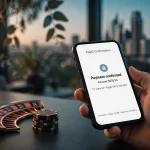
Foreign licensing does not establish approval in Australia; access, payments and game conditions can also vary by operator.

An “international casino” in this context is an online casino operated outside Australia. The operator may be incorporated or licensed overseas, while its website is reachable from an Australian internet connection—or may be blocked. The label describes the operator’s location and the way the service is presented; it does not mean the casino is licensed to offer its games under Australian law.
The jurisdictions commonly associated with offshore casinos that accept Australian customers include Curaçao, Malta and Gibraltar. The Malta Gaming Authority, often shortened to MGA, is a licensing authority; Curaçao and Gibraltar are also associated with offshore casino licensing. These names identify where an operator may be licensed or regulated. They do not establish that the operator has approval to provide online casino services in Australia.
That distinction matters because a foreign licence and permission to serve customers in Australia are separate questions. An overseas regulator’s rules apply within its own licensing framework. They do not displace Australian law or grant an operator an Australian authorisation. A site can therefore display an overseas licence while still being prohibited from offering its casino service to people located in Australia.
Choosing an international casino means weighing the details that matter to you, including licensing and payment terms. Use this list as a starting point when reviewing options available to Australian players in 2026.
JustCasino
JustCasino is listed with a Curacao Gaming Control Board licence. You can use that licensing detail as a starting point for your own checks.
Playfina Casino
Playfina Casino is listed with a Curacao eGaming licence held by Hollycorn N.V. since 2017. Its minimum deposit is A$20–30, depending on the offer.
LevelUp Casino
LevelUp Casino is listed with Curacao eGaming licence OGL/2023/174/0082, held by Dama N.V. The stated minimum deposit is A$15.
Roby Casino
Roby Casino is listed with a Curacao eGaming licence held by Roby Games Ltd. You can consider this licensing information when assessing the casino.
Golden Pokies
Golden Pokies is listed with a Curacao licence. You can use this as a starting point for checking its licensing details.
MrPacho
MrPacho lists crypto payouts at 30–120 minutes and fiat payouts at 24–72 hours. Its minimum deposit is A$30.
House of Pokies
House of Pokies lists an international iGaming licence, but the source does not name the jurisdiction. Its stated PayID payout time is 1–24 hours, and the minimum deposit is A$30, or A$10 for PayID.
DragonSlots Casino
DragonSlots Casino is listed with a Curacao Gaming Authority licence held by Jumpman Gaming Ltd. You can use that information when reviewing its licensing.
LuckyVibe
LuckyVibe is listed with Curacao Gaming Control Board licence OGL/2023/176/0095, held by Hollycorn N.V. You can check this licensing detail as part of your assessment.
Lucky Dreams
Lucky Dreams lists a Curacao licence and a minimum deposit of A$20 when using POLi. You can consider both details when deciding whether it suits your payment preferences.
The Interactive Gambling Act 2001 places the legal restriction on operators: it makes providing online casino-style gambling to people in Australia unlawful. The relevant issue is not whether a website calls itself “international,” nor whether its servers or business are based offshore. It is whether the operator is providing the covered service to customers in Australia.
This means that an offshore licence does not create an exception to the Australian restriction. A licence may indicate that an operator is subject to rules in the issuing jurisdiction, but it does not turn an otherwise prohibited Australian-facing service into a locally authorised one. The distinction is between the operator’s overseas regulatory status and the legality of offering the service in Australia.
The age threshold is another part of the Australian context: a person must be at least 18 to register and gamble. Meeting that age requirement does not change the restriction on operators. Age eligibility and an operator’s authority to provide a service are different conditions, and one does not substitute for the other.
The Australian Communications and Media Authority (ACMA) actively blocks access to illegal gambling sites. As a result, an offshore casino’s website may not load through an Australian connection, even if the operator continues to run the site elsewhere. Blocking is an access-control measure; it is not evidence that the foreign licence has been cancelled, or that the site has obtained permission to serve Australia.
The practical result is that availability can vary. A site may be visible in one jurisdiction but inaccessible in Australia because of blocking. A change in how a site is reached does not alter the legal status of the operator’s offer. Nor does an overseas licence, by itself, explain whether a particular Australian connection will be able to reach the site.
It is useful to keep three ideas separate: where the operator is based, which jurisdiction may license it, and whether it may offer casino services to people in Australia. “International” generally answers the first question, while an overseas licence relates to the second. Neither resolves the third, which is governed by Australian law.
For that reason, the phrase “international online casino” should not be read as a guarantee of Australian availability or local approval. It is a broad description of an offshore business model, not a regulatory category that overrides national rules. The same applies when the words are rearranged as “casino international” or “international casino online”: the wording does not change the operator’s location, licence, or legal position.
When you encounter a site associated with Curaçao, the Malta Gaming Authority or Gibraltar, treat the jurisdiction name as information about the operator’s licensing context—not as proof of Australian authorisation. The Australian framework still applies to services offered to people in Australia, and ACMA blocking can affect whether those services are accessible. These points define what the label means in this market without confusing an offshore licence with permission to operate locally.
An overseas licence does not grant an operator authorisation to provide online casino services in Australia, nor does it override national laws.
The Interactive Gambling Act 2001 draws a legal distinction between the service provider and the person using the service. It makes it illegal for an operator to provide real-money online casino-style games to people physically located in Australia. The relevant factor is where the customer is, not whether the operator is based overseas or calls its service an international casino.
That boundary covers casino-style gambling offered online to people in Australia. An offshore website does not become exempt from the Australian restriction simply because it operates under a licence from another jurisdiction. A foreign licence may describe the operator’s regulatory arrangements elsewhere, but it does not authorise the operator to provide prohibited services to customers in Australia.
The individual player’s position is different. Under the Act, an Australian player is not committing an offence merely by playing at an offshore mobile casino. That does not change the operator’s legal position, make the service lawful to provide in Australia, or amount to approval of the site by Australian authorities. The distinction is between the rule imposed on the provider and the absence of a corresponding offence for the player.
Legal status also does not guarantee that a site will load. The Australian Communications and Media Authority actively blocks access to illegal gambling sites. A blocked page may therefore reflect an access restriction rather than a fault with your device or internet connection. Conversely, being able to open a website does not establish that the operator may legally offer its games to people located in Australia.
These points should be kept separate: the law restricts operators from supplying online casino-style games to customers in Australia; it does not make an individual player’s participation an offence under that Act; and access may still be disrupted by blocking. None of those statements turns an offshore service into a locally authorised one.
When considering international online casino games, the practical question of whether a site is reachable is not the same as the legal question of whether it may provide the service. Treating a foreign licence, a working website, or the player’s lack of liability as proof of local approval confuses separate issues. The legal boundary concerns the operator’s offer to people in Australia, while access controls determine whether a particular site can be reached.
Opening an offshore casino website and placing a real-money wager are different steps. A page may load without confirming that you can register, deposit or withdraw from Australia. Before sending money, check the operator’s current terms and registration process to confirm that it accepts people located in your state or territory. Do not treat access to the website as evidence that your location is eligible.
That check matters because the Interactive Gambling Act 2001 prohibits operators from providing real-money online casino games to people in Australia. The prohibition is directed at the operator; playing at an offshore casino is not, by itself, an offence for an individual under that Act. This does not make an offshore service locally authorised or guarantee that it will provide the protections available through an Australian complaints process.
No Local Redress
If an offshore casino refuses to pay your winnings, there is no Australian government body to handle the complaint or compel the release of funds.
If a site describes itself as an international online casino for real-money play, understand what that means in practice: it is an offshore service, not an Australian one. An offshore crypto-friendly casino may also present cryptocurrency as a payment option, but that label does not establish that the operator accepts your location or will resolve a payment dispute. Confirm eligibility before depositing, and read the site’s terms rather than relying on a page that simply opens.
Check how the account and withdrawal requirements work before committing funds. A casino may request identity checks before allowing a first withdrawal, including a selfie or identity document and proof of address. If those documents are incomplete, inconsistent with your registration details or not accepted, a withdrawal can be delayed while the operator reviews them. Find out what documents are required and whether verification must be completed before you deposit.
Payment rules can also affect whether you can retrieve funds by the method you expect. A specialist review has reported that some casinos require a withdrawal through the same method used for the deposit, while other methods may be available only for deposits. Treat that as a condition to verify with the particular operator, not as a universal rule. Check the payment terms before choosing a deposit method.
If you use a VPN to get around a location block, the operator may treat that as a breach of its terms. Winnings could be voided and the account closed. Do not use a VPN to access a casino that blocks Australian users.
Finally, consider what happens if the operator refuses to pay. Australian players do not have an Australian government body to handle complaints against an offshore casino or compel it to release withheld winnings. That leaves you dependent on the operator’s own dispute process, so confirm location eligibility and understand the withdrawal conditions before depositing—not after a balance has built up.
For an offshore casino that accepts Australian users, mobile access is generally provided through its website or a Progressive Web App (PWA), rather than a native app downloaded from an app store. The distinction affects how you open the service and how it appears on your phone; it does not turn the website into a locally regulated service.
A browser is the default route because casino apps are seldom available through Google Play or Apple’s App Store in Australia. You open the casino website in your mobile browser and use its mobile interface there. This avoids installing a separate native application, while keeping access tied to the website.
A PWA is also website-based. It creates a shortcut on your device and can display in a format that resembles a native app, but it remains connected to the casino website. To add one, open the site and use its install or add-to-home-screen prompt, then confirm the installation when your device asks. The exact wording and appearance of that prompt can vary by device and browser.
A native app is a separate application installed on the phone. When an offshore casino app is not offered through an official app store, a user may encounter instructions to install it from another source, sometimes called sideloading. That process bypasses the store’s ordinary distribution route. It can expose your device to security risks, and the level of risk depends on the operator and the app being installed. Treat an installation request as a separate decision from simply visiting a website; do not assume that an app is safe because it carries a casino’s name.
There is also an important difference between real-money offshore access and social or free-play casino apps. Apps that use virtual credits, rather than real-money gambling, are legal to use in Australia and can be obtained through Google Play and Apple’s App Store. Their availability in those stores does not mean that real-money casino apps are similarly available or that the two types of service have the same legal status.
If you are considering an offshore service, confirm that it accepts your location before depositing. Access through a browser or PWA does not establish that you are eligible to use the service, and an app interface does not change the operator’s obligations under Australian law. For a punter, the practical choice is therefore about access format: browser use requires no installation, a PWA adds a website shortcut, and a sideloaded native app involves an additional security consideration.
A mobile casino site is generally used through your phone’s browser, rather than through a dedicated app. The browser loads the site, and you sign in with the same account used on desktop. That means the app is not a separate account or a separate version of your profile: the site is the point of access, while the browser is the software displaying it.
This distinction matters when something fails. If a page stalls or does not respond, the cause may be the connection, the browser, or the phone’s available memory—not necessarily the account itself. Treating those as separate possibilities makes it easier to identify what is going wrong without repeatedly trying the same action.
When you enter a site address, your browser requests the page and displays what it receives. The phone’s browser and operating system have to manage that page alongside other open tabs and apps. If the connection is poor, parts of the page may take too long to load or may not load at all. If the browser is outdated, it may have trouble displaying or running parts of the site. Limited available memory or many apps running in the background can also interfere with how smoothly the browser operates.
A specialist review identifies poor connectivity, low device memory, outdated browsers and excessive background activity as common sources of mobile problems. These are possible causes, not a diagnosis of any particular failure. A site that does not load once does not, by itself, show which part of the chain is responsible.
Start with the simplest distinction: is the problem limited to one page, or does the browser have difficulty loading other pages too? If other pages also struggle, the connection or browser may be involved. If the rest of the browser works normally, the issue may be specific to the site or to how that page is loading. This comparison helps narrow the cause; it does not prove that the site is functioning correctly.
Mobile Troubleshooting
Check connectivity
Determine if the problem is limited to one page or if the browser struggles to load other websites.
Manage resources
Close unused background apps to free up memory and ensure the browser is up to date.
Evaluate the page
Wait for the page to settle instead of tapping repeatedly, then reload if the browser stops responding.
Next, check whether the browser is current and whether other apps are using the phone’s resources. Closing apps you are not using can reduce background activity. If the phone has little memory available, closing other apps may also leave more capacity for the browser. These steps address the device side of the problem; they cannot fix a weak connection or a site-side fault.
If a page is partway through loading, avoid tapping repeatedly while it is unresponsive. Multiple attempts can make it harder to tell whether the first action completed. Wait for the page to settle, then check what is displayed before trying again. If the browser has stopped responding, reopening it may help distinguish a temporary browser problem from a continuing site or connection issue.
Because mobile and desktop access use the same account, switching devices does not mean creating a new profile. It does mean that you should pay attention to which account is signed in on the phone. If the site opens but does not show the expected account state, check the sign-in status before assuming that information has been lost.
A browser can also retain a page that is no longer responding as expected. Reloading may be reasonable when a page appears stuck, but first consider whether an action was already submitted. If you are unsure, check the page state before repeating it. This is a general precaution when a connection drops during any online activity; a reload cannot establish whether an earlier request was completed.
Use a step-by-step check rather than changing several things at once. Confirm the connection, close unused background apps, and make sure the browser is up to date. Then reopen the page and see whether the behaviour changes. Changing one condition at a time makes the result easier to interpret: if the page works after closing background apps, that points toward a device-resource issue, though it does not establish the cause with certainty.
If the same failure continues after those checks, the problem may not be something you can resolve from the phone. Avoid assuming that installing an app would solve it. A different access format does not necessarily remove a connection, browser or site-side problem. The practical question is whether the site can be reached and used reliably through the browser—not whether an app icon is available.
These checks explain mobile performance only. They do not establish that a particular casino site is available to you or that using it is permitted.
A deposit and a withdrawal are separate transactions, and the available routes may differ. Before paying, confirm that the offshore site accepts your location and check its cashier terms: a payment option shown on one account or at one time may not be available to every customer.
A specialist review has listed PayID, POLi, BPAY, cards and cryptocurrency among possible deposit methods, but that information may not reflect current availability. POLi stopped processing local transactions after shutting down its Australian operations in September 2023. The same kind of review described PayID deposits as near-instant and typically free; treat that as a report about the service, not a promise about a particular casino or transaction. The operator’s current cashier page and terms are the relevant place to check.
Payment Methods
While PayID, BPAY, and cryptocurrency are often listed as options, POLi ceased Australian operations in September 2023 and no longer processes local transactions.
Card payments can fail before funds reach the casino. A specialist review notes that some Australian banks block or flag gambling-related card charges. A declined payment may therefore reflect the bank’s controls rather than an error in your account details. Do not assume that trying another card or route will work; check the payment conditions first.
Cashout introduces extra steps. The first withdrawal commonly triggers identity checks, which may involve providing a selfie or identity document and proof of address. The casino may also require you to withdraw through the same method used for the deposit, while some routes accept deposits but cannot be used for withdrawals. Check these rules before paying, so you know whether a separate cashout method or additional verification may be required.
Processing time depends on both the casino’s handling and the payment route. A specialist review reports that bank-transfer withdrawals can take up to five business days. That is a reported timeframe, not a guaranteed delivery date; account checks or other processing stages may affect when a payment is completed. The same type of review reports that some casinos set weekly or monthly withdrawal ceilings, with figures often falling between $4,000 and $10,000 per week. Treat those figures as reported examples, not standard limits. Check the specific terms for the applicable cap and how it affects a larger balance.
A bonus is not the same as cash that you can withdraw immediately. Its stated value depends on the conditions attached to it: how much qualifying wagering is required, whether you must deposit first, which games count, when the offer expires and whether a cashout cap applies. Read those terms before claiming, including for an offer described as a no-deposit bonus. “No deposit” describes one condition for receiving an offer; it does not mean the bonus is free of play-through or withdrawal restrictions.
Wagering requirements specify how much eligible play must take place before bonus funds, or winnings linked to them, can be withdrawn. A specialist affiliate review reports that welcome offers commonly set requirements at 30x to 50x the bonus amount, with requirements above 40x considered steep. Treat these as review-reported figures, not a rule that applies to every casino or offer. Check the operator’s current terms for the exact calculation: the amount used as the base can affect the total required, and the offer wording should make that clear.
A minimum deposit can also change the real cost of accepting a bonus. An offer may require you to deposit before it is credited, so compare that condition with the wagering requirement rather than judging the offer by its headline value. If the required deposit is more than you intended to commit, declining the offer avoids taking on its attached rules.
Game restrictions determine which activity contributes to wagering, and whether different games count at different rates. The terms may exclude some games or limit their contribution. If you assume all eligible play counts equally, you could reach the apparent wagering target without satisfying the offer’s actual calculation. Check the restricted-game list and any contribution rules before starting.
Expiry creates a separate constraint. A specialist affiliate review reports that many bonuses have a clearance period of 7–10 days; if the deadline is missed, the bonus can be lost. The exact period is offer-specific, so check when the clock starts and what happens to any associated winnings if the bonus expires. A short deadline can make an otherwise attractive offer impractical if you cannot meet its conditions within the stated period.
A cashout cap limits how much can be withdrawn from bonus-related winnings. This means completing wagering does not necessarily make the full balance withdrawable: the cap may still apply. Check whether it covers winnings generated from the bonus and how the operator defines the amount subject to the limit.
Assess the terms as a connected set: wagering target, minimum deposit, eligible games, expiry and cashout cap. A no-deposit offer can still carry each of the latter restrictions. If any term is unclear, do not assume the most favourable interpretation; ask the operator to explain it before claiming.
A roulette game does not fall outside Australia’s online gambling rules because it is streamed live or hosted by an operator overseas. The Interactive Gambling Act 2001 prohibits gambling operators from offering online casino-style games to people in Australia. Roulette provided online to someone located in Australia falls within that boundary, whether the wheel is presented as a live table or through another online format.
The distinction is between the operator’s conduct and the person accessing a site. The Act targets operators that provide prohibited services to people in Australia; playing at an offshore casino is not itself illegal for an individual Australian under that Act. That distinction does not make the service lawful for the operator to provide locally, or establish that a particular site is authorised to serve Australian residents.
The word “international” describes an operator’s offshore position, not an exemption from Australian law. A foreign licence or a site’s willingness to load in a browser does not change the restriction on offering online casino-style games to people in Australia. Nor does the live presentation of roulette alter the nature of the service: the relevant issue is that an online casino game is being offered to a person in Australia.
Access can also be affected by enforcement. The Australian Communications and Media Authority actively blocks access to illegal gambling sites. A page that is temporarily reachable should not be treated as evidence that the operator may legally offer its roulette service in Australia or that access will remain available.
If you encounter a site describing itself as an international live roulette casino, read that description as a marketing label rather than a statement about Australian legal status. The relevant question is not whether the wheel is live, but whether an operator is offering an online casino-style game to someone physically in Australia. The law’s restriction applies to that offer.
Do not infer from a displayed table, a live video feed or a sign-up page that Australian access is permitted. Those features describe how a service may be presented; they do not override the legal boundary. The same principle applies when roulette is grouped with other casino games or advertised as part of a broader offshore casino service.
Cryptocurrency is one payment route described for some offshore, crypto-friendly casinos; it is not a guarantee that a particular site accepts Australian customers or a particular coin. Before sending funds, confirm that the casino accepts your location and check which currencies it supports. A transfer to an address for the wrong currency or network may not be recoverable, so compare the casino’s payment instructions with the wallet’s details before confirming.
The transaction has separate stages. A deposit may first need to be sent from your wallet, then credited by the casino. A withdrawal runs in the other direction: the casino must approve it and send it before the funds arrive in your wallet. The time displayed for a withdrawal may therefore describe only the casino’s processing, not the full time until the transfer is available to you. Check the payment terms for any pending review or account checks.
A specialist review reports that crypto and e-wallet withdrawals are processed in under 24 hours. Treat that as a reported timing, not a service-wide standard or a promise for an individual request. The casino’s own processing rules and any checks it applies can affect when it sends funds. Network processing also sits outside the casino’s control, so approval and receipt are not necessarily simultaneous.
Mobile payment information has also listed PayID, POLi, BPAY, cards and cryptocurrency as deposit routes, with processing times varying by method. That listing should not be read as a current menu for every casino: POLi ceased Australian operations in September 2023 and no longer processes local transactions. Payment options can change, so verify the available methods directly before making a deposit. Do not assume that a method available for depositing can also be used for cashing out.
An offshore service is not an Australian government-backed payment provider. If it refuses to pay winnings, there is no Australian government body to handle a complaint on your behalf. Using a VPN to reach a blocked casino may also lead to winnings being voided and the account closed. These risks remain even when a deposit or withdrawal uses cryptocurrency.
An offshore crypto-friendly casino may be visible online without being legally authorised to provide real-money casino games to people in Australia. The Australian Communications and Media Authority (ACMA) blocks access to illegal gambling sites, so a page that opens today may not remain accessible. Before depositing, confirm directly with the operator that it accepts customers in your location. Do not try to get around a block with a VPN: the casino may treat the account as ineligible, void winnings or close it.
Access to a site does not guarantee that you can recover money if a dispute arises. If an offshore casino refuses to pay winnings, there is no Australian government body responsible for handling your complaint. Consider that limitation before sending money, and do not treat a site’s claims about its service as a substitute for a route to independent local redress.
The term “best” cannot remove these risks. An operator ranking or recommendation cannot establish that a casino will accept your location, remain accessible or resolve a payment dispute fairly. Assess the conditions that apply to your own account instead, and avoid depositing until location eligibility is clear.
Check what controls are available before you play. Deposit, loss and wager limits can restrict different parts of your spending; session time limits can constrain how long you play, while self-exclusion is an option for stopping access. Their presence does not remove the underlying legal or payment risks, but knowing how each control works helps you decide whether it can support your own limits.
Treat uncertainty about location, access or payment as a reason to pause, not as a problem to solve by concealing where you are. If the operator’s conditions do not clearly permit Australian customers, do not deposit.
Yes. You can play through a mobile browser, and some casinos also offer a Progressive Web App that you can add to your home screen.
No. Most mobile casino play is through a browser, using the same account as on desktop.
No. Dedicated casino apps are rarely listed on Google Play or the Apple App Store in Australia, so browser play is the usual option.
PayID is available at some mobile casinos as a deposit method; deposits are typically near-instant and free. Mobile casino play is usually through a browser rather than a dedicated app.