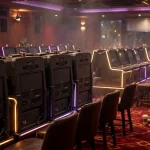
The guide distinguishes digital slot terminology from evidence about a specific title, while outlining payment, access and legal considerations.

In online gambling terminology, “machine” and “pokie” can describe the digital slot-game format. They do not mean that you are looking at a physical cabinet. A phrase such as “Dragon Link pokie machine” uses familiar land-based wording to identify a type of digital game; the label alone does not establish what a particular title contains or whether it can be accessed.
The distinction matters because a category name is not a specification. “Pokie” tells you how the game is being classified, not how its software behaves. It does not, by itself, tell you what appears on screen, what rules apply, how a round works, or whether a particular version exists online. Those details would need to be established separately rather than inferred from the word “machine.”
The same limit applies to nearby expressions such as “casino machine” or “slot machine.” In an online context, these are ways of referring to the digital slot format, not proof that a named game is supplied by a particular casino or can be played through a particular website. Search wording may combine a title with several format terms, but adding those terms does not verify a product, its provider, or its availability.
If you’re exploring Dragon Link online pokies in Australia for 2026, this list gives you a concise reference to the operators and the details available about them. Use those details to decide what you may want to check before choosing a casino.
JustCasino
You can note that JustCasino is listed with a Curacao Gaming Control Board licence.
Playfina Casino
You can note Playfina Casino’s Curacao eGaming licence, held by Hollycorn N.V. since 2017. Its minimum deposit is A$20–30, depending on the offer.
LevelUp Casino
You can note LevelUp Casino’s Curacao eGaming licence, OGL/2023/174/0082, held by Dama N.V. Its minimum deposit is A$15.
Roby Casino
You can note that Roby Casino is listed with a Curacao eGaming licence held by Roby Games Ltd.
Golden Pokies
You can note that Golden Pokies is listed with a Curacao licence.
MrPacho
You can consider the stated payout times when assessing MrPacho: crypto payouts take 30–120 minutes, while fiat payouts take 24–72 hours. The minimum deposit is A$30.
House of Pokies
You can note that House of Pokies lists an international iGaming licence, though the source does not name its jurisdiction. PayID payouts are stated as 1–24 hours; the minimum deposit is A$30, or A$10 for PayID.
DragonSlots Casino
You can note that DragonSlots Casino is listed with a Curacao Gaming Authority licence held by Jumpman Gaming Ltd.
LuckyVibe
You can note LuckyVibe’s Curacao Gaming Control Board licence, OGL/2023/176/0095, held by Hollycorn N.V.
Lucky Dreams
You can note that Lucky Dreams is listed with a Curacao licence. Its minimum deposit is A$20 when using POLi.
It is also useful to separate the game format from the way a gambling service handles payments. A digital slot game is the software category; a payment method is a separate part of the service around it. For instance, the term “Bitcoin pokie” describes a digital slot offered in a setting that accepts Bitcoin as payment. Bitcoin is not, by that description, a game feature. Nor does the payment label establish how the game itself works.
That separation prevents a common misunderstanding. A phrase that includes “online” may indicate that the subject is being discussed in a digital setting, but it does not prove that an online version is currently available. Likewise, attaching “Australia” to a machine-related phrase identifies a location of interest; it does not establish that a service is available to people there or that it is permitted to provide real-money play. A label cannot answer those questions on its own.
For a named title, the careful reading is therefore narrow: the words may indicate that someone is referring to it as a digital pokie, but they do not supply evidence about its specific design. Do not infer particular symbols, bonus rounds, jackpots, reel layouts, themes, or rules from the word “machine” or from the title alone. Even an image or promotional description would need to be checked against reliable information about the exact version being discussed.
This is why “Dragon Link slot machine” and “Dragon Link online pokie” should not be treated as complete descriptions. They combine a name with a general format label. The combination may help identify the subject someone has in mind, but it does not settle whether the name refers to one distinct online game, whether multiple versions exist, or whether any version is accessible. Those are separate claims and require separate evidence.
The word “machine” also does not tell you what controls the game or how its results are generated. It is a category label, not a technical explanation. Without dependable details about the specific software, you cannot use it to predict a result, compare versions, or determine whether two similarly named offerings are identical. Treating the label as if it answered those questions would turn a broad description into unsupported claims.
A useful way to read these phrases is to divide them into parts. “Pokie” or “slot machine” names the general digital game format. A title-like phrase identifies what the speaker says they mean. Words such as “online” or a place name describe the context being discussed, not verified access or availability. Payment terminology, when present, concerns a separate layer of the service. Keeping those meanings apart makes it easier to see what the wording actually conveys—and what it leaves undetermined.
Online pokies may be offered in free-play or real-money modes. The difference is not simply whether a screen displays a game: it is whether you stake money that can be lost and whether a result can lead to a monetary return. That distinction changes what the activity involves, even if the interface looks similar.
Use the game without staking real money to see the presentation or try controls. Results are not cash wins and credits cannot be withdrawn.
Stake real money for a chance of monetary return. This mode exposes the player to financial loss and is for people aged 18+.
In free play, you use the game without staking real money. It can let you see how a digital game is presented or try its controls, but it does not make the activity equivalent to gambling for money. A result in free play is not a cash win, and simulated credits should not be treated as funds you can withdraw. The exact design of a free-play option depends on the service providing it.
A search for free Dragon Link pokies, or for a way to play Dragon Link online without paying, does not establish that a free version is available. Search wording describes what someone is looking for; it does not verify a particular game, its versions or where it can be accessed. The same applies to phrases such as “free slot” or “online review”: they do not confirm the features or availability of a named game. Keep the general idea of free play separate from any claim about a specific title.
Real-money play has a different financial structure. You stake money, and the result may reduce your balance or, subject to the game and service’s terms, produce a return. A visual result alone does not determine whether money is owed: the account balance, stake and applicable rules matter. Unlike free play, this mode exposes you to financial loss. It is for people aged 18 years or older.
The two modes should not be treated as interchangeable merely because they appear to use similar controls or graphics. Free play does not demonstrate what a real-money session would cost, and it cannot establish that any real-money version is lawful, accessible or available to Australian residents. Nor does a free-play search prove that a particular title has a demo mode. Those are separate questions from the basic distinction between simulated play and gambling with money.
If you are comparing descriptions, check what “free” means in context. It may refer to a no-stake demonstration, promotional credits, or simply a page that discusses a game without providing playable access. These labels do not mean the same thing. In particular, promotional wording can blur the difference between an activity that uses no real stake and one that requires a deposit or other payment. Read the conditions attached to the offer rather than assuming the label tells you how it works.
The boundary is practical: if you are not risking money and cannot turn the play result into money, you are looking at a non-cash mode; if a stake can be lost or a result can affect money in your account, you are dealing with real-money gambling. A page that describes a game as free does not, by itself, establish which of those conditions applies. Look for clear explanations of whether money is required, whether results have monetary value, and what conditions govern access.
This distinction also helps when interpreting a review. A review may discuss a game’s appearance or describe a free-play experience, but that does not show that the same version is offered for real-money play. Conversely, finding a real-money description does not establish that a free mode exists. The mode must be identified independently; one cannot be inferred from the other.
For a reader considering the phrase “Dragon Link free pokies,” the careful interpretation is therefore limited: it expresses interest in playing without a monetary stake. It does not confirm that a free version exists or provide evidence about a named game’s mechanics. Free play and real-money play are separate modes, with different financial consequences, and claims about one should not be used to imply facts about the other.
“Bitcoin pokies” describes digital slot machines that accept Bitcoin as a form of payment. The phrase combines two separate ideas: a type of game and a way of paying. It does not, by itself, tell you how a particular game works, what it contains, or whether it accepts Bitcoin.
Keeping those layers separate matters. The game determines its own play rules and uses game credits to represent play. Bitcoin belongs to the payment layer: it is the currency a service may accept for account transactions. A Bitcoin payment method does not establish anything about a game’s theme, jackpot, features or title. Nor does a game’s name establish that Bitcoin can be used with it.
This distinction helps avoid a common assumption: that a search for a particular online game, or a machine with a familiar name, confirms a Bitcoin version is available. The payment description applies only where the service actually supports Bitcoin. It should not be read as evidence that every digital slot machine accepts it, or that a named game is connected to a particular payment method.
Bitcoin also should not be confused with the credits shown during play. Credits are part of the game interface; Bitcoin is a payment asset. A credit balance is not automatically a Bitcoin balance, and the two labels do not imply a fixed conversion. A specialist review has described game credits as specific to each game and their Bitcoin value as dependent on the game and the current Bitcoin price. That is a source-specific account, not a universal rule for all services.
The practical point is that payment compatibility and game identity need to be checked independently. A description might mention Bitcoin without identifying which games can use it. Conversely, a page about a named game might say nothing about payment options. Neither wording is enough to infer the other.
So, “Bitcoin pokies” is a payment-category label, not a promise about a particular title or its operation. It identifies digital slot machines associated with Bitcoin payments, while leaving game details and service availability as separate questions. The label alone cannot establish that a particular Dragon Link title accepts Bitcoin.
The phrase “real-money pokies” describes gambling with funds that can be lost or winnings that may be paid out. In Australia, the central legal distinction is not the name of a game or the currency used. It is whether an online casino provides real-money gambling services to people who are physically in Australia.
Legal Restriction
The Interactive Gambling Act 2001 prohibits operators from providing real-money online casino games, including pokies, to customers physically located in Australia.
The Interactive Gambling Act 2001 prohibits operators from providing real-money online casino games to customers in Australia. Pokies are included, alongside casino-style games such as poker, blackjack and roulette. That restriction applies to services offered to residents here; changing the payment method to Bitcoin does not change the nature of the service. A page describing Dragon Link pokies for real money therefore needs to be read against the same legal boundary as any other online casino game.
This rule concerns what operators may provide. It does not mean that a foreign licence authorises an operator to offer real-money pokies to Australians. The operators discussed hold offshore licences, primarily from Curacao eGaming or the Anjouan Gaming Authority. Those licences are issued outside Australia. They do not amount to an Australian gambling licence, and they do not displace the Australian restriction on providing prohibited services to customers here.
That distinction can be easy to miss when a site displays a regulator’s name or licence information prominently. A licence from an overseas authority and permission to serve customers under Australian law are different things. The first identifies an offshore regulatory arrangement; it does not establish the second. Nor does describing a site as an “online casino” or calling a game a “slot machine” alter the legal status of the service.
The same reasoning applies to searches about Dragon Link online pokies for real money, or about a Dragon Link casino accepting real-money play. The wording of a search does not establish that a particular game is available, that a service may lawfully be provided in Australia, or that an offshore operator is protected by local regulation. The legal issue attaches to the real-money casino service and the Australian customer location, not to a particular game title.
For a customer, the practical consequence is that an offshore licence should not be treated as equivalent to local consumer protection. Australian consumer protection laws do not apply to the offshore operators discussed. If a disagreement arises over an account, payment or withdrawal, you cannot assume that Australian consumer protections apply to the operator in the way they would to a locally regulated business. The existence of a foreign regulator does not itself provide the same rights or recourse under Australian law.
It is also important not to confuse a site’s commercial presentation with legal permission. An operator may describe a service as available internationally, display licence details or publish information about games. None of those statements changes the Australian legal boundary. Likewise, a payment method cannot make a prohibited service permissible: Bitcoin is a means of transferring value, not a licence or an exemption from gambling rules.
This is a legal distinction, not an endorsement of offshore gambling. Nothing about an offshore licence should be read as a recommendation to use a service, or as confirmation that a specific Dragon Link game can be accessed or played for money from Australia. Real-money gambling is restricted to adults aged 18 or over, but meeting an age requirement does not remove the operator-side prohibition described above.
This page is affiliate material and may include sponsored links. That disclosure does not change the legal position or imply that an offshore service is suitable, locally authorised or protected by Australian consumer law. Any commercial link should be understood in that context, not as evidence that real-money online casino services may lawfully be offered to Australians.
Offshore licenses (such as from Curacao eGaming or the Anjouan Gaming Authority) do not displace Australian restrictions or provide local consumer protections.
The key boundary is therefore straightforward: Australian law prohibits online casinos from providing real-money pokies to people in Australia, while offshore licensing does not turn that service into a locally authorised one. A game name, a foreign licence and a cryptocurrency payment method each describe different things; none overrides that boundary.
A Bitcoin deposit begins with the casino displaying an account address for the transfer. The player copies that address and sends Bitcoin to it from a personal wallet. The address is the destination: if it is copied incorrectly, the transfer may go somewhere the casino cannot access. Bitcoin transactions sent to an incorrect address are irreversible and generally cannot be recovered.
A transfer can reach the displayed address without appearing in the casino account straight away. One cause is address reuse: the operator may have difficulty matching a payment to the correct account if the same deposit address has been used again. An underpayment can also prevent a deposit from being recognised as expected. In other cases, the operator’s deposit detection is delayed. These problems differ from a transfer sent to a wrong address; the first step is to check the transaction details against the casino’s deposit record, rather than sending another payment.
A withdrawal runs in the opposite direction, but it is not simply an automatic reversal of the deposit. The player copies a wallet address they control and enters it in the casino’s withdrawal form. The operator must then process the request and send Bitcoin to that destination. A mistake in the address can put the withdrawal beyond recovery, so the entered characters need to match the intended wallet address exactly.
A request may remain pending even when the address is correct. Operator-side approval queues can hold it before processing. Incomplete identity checks can also delay approval, as can batch processing restricted to business hours. These are operator or account-processing stages, not evidence by themselves that a transfer has been sent to the blockchain. A pending request and a completed blockchain transfer are different states.
If a withdrawal is stuck, do not send additional money on the promise that it will unlock or release the payout. That demand does not correct an approval queue, a verification gap or a processing schedule, and the extra transfer may be lost. Keep the withdrawal record and relevant transaction details, and use the operator’s stated support channel to ask what stage the request has reached. Do not share wallet recovery phrases or private keys; they are not needed to identify a payment.
The useful distinction is between destination, matching and processing. A wrong destination can make Bitcoin unrecoverable; a deposit that is not matched may need investigation; and a withdrawal awaiting approval has not necessarily been broadcast. Knowing which stage has failed helps prevent a second transfer from compounding the problem.
A game result and access to a withdrawal are separate matters. The result comes from the game’s own process; account checks and an operator’s handling of a request affect whether funds can be released. Neither tips nor a particular pattern of play can guarantee a win, and no Dragon Link-specific outcome or feature can be inferred from the game’s name.
Attention: A significant win may prompt an operator to review an account, which can be used to delay payment, especially for new accounts or first large withdrawals.
A significant win may prompt an operator to review an account before processing a withdrawal. Such a review can be a legitimate security check, but some operators may also use reviews to delay payment, particularly when an account is new or the withdrawal is the player’s first large one. A request for review does not, by itself, establish that the result was invalid. Keep records of relevant account messages and the stated reason for any delay.
Bonus conditions can create a separate dispute. The contribution assigned to a game may determine how its wagers count toward a bonus requirement. The stated arrangements can differ by game: table games may contribute 0%, while pokies may contribute 100%; some high-return slots may be capped at 50%. Those figures describe possible terms, not a rule that applies to every operator or game. Read the conditions that govern the specific bonus before relying on a displayed progress total.
A maximum-bet condition can also matter: exceeding the limit set by the bonus terms may void bonus play. That is a rule-compliance issue, not evidence about whether a game is more likely to produce a win. If terms are unclear, preserve a copy and ask the operator to identify the applicable clause; do not assume that a bonus label explains its restrictions.
These points are general and do not establish anything about Dragon Link’s outcomes, bonus rules or withdrawal treatment. In Australia, real-money online casino games are prohibited services for operators to provide to people located in the country. Real-money gambling is for adults aged 18 or older where lawful. This affiliate content may include sponsored links and is not a recommendation to use an offshore casino.
A phone can display an account page through a mobile browser, or through an app where an operator provides one. That distinction does not confirm that an official Dragon Link app exists, that a particular game is available in an app, or that its return-to-player rate can be established from the app label. An app name or icon alone is not evidence of who operates it.
Account creation generally involves entering basic details and choosing a secure password. On a small screen, check that you are entering information into the intended service and keep access to your account protected. Do not treat a mobile interface as proof that an operator is authorised to provide gambling services in Australia. Australian law prohibits operators from offering real-money online casino games to people located in the country; this explanation is not a recommendation to use an offshore service.
Verification can involve more than the information supplied at registration. If cryptocurrency was used, a specialist review describes possible checks such as signing a message from the address that made the deposit, or submitting a wallet screenshot showing the sending transaction. These are ways an operator may seek evidence connecting a payment to an account; the exact request can vary. Do not share wallet recovery words or private keys as proof. They give control of the wallet, rather than merely demonstrating a transaction.
Verification Process
Submit Evidence
Provide the requested information, such as signing a message from your deposit address or submitting a wallet screenshot.
Protect Credentials
Ensure you do not share wallet recovery phrases or private keys, as these are not needed to identify a payment.
Record Submission
Keep a record of the submitted evidence and the operator's response.
If a verification request appears on a phone, read what evidence is requested before sending anything and avoid exposing unrelated wallet or personal information in a screenshot. Keep a record of what you submit and any response. Real-money gambling is for adults aged 18 or over, but meeting the age requirement does not change the Australian legal restriction. Mafiacasino-hub-au.com may receive compensation through affiliate links; that disclosure does not make an offshore gambling service lawful or recommended.
A general Bitcoin payment sequence begins with acquiring Bitcoin through a cryptocurrency exchange, where fiat currency can be exchanged for it. The Bitcoin is then held in a wallet. In a payment flow, a sender copies the recipient’s wallet address and initiates a transfer from their own wallet. That describes the mechanics only; it is not a recommendation to deposit with an offshore gambling operator.
For people in Australia, this distinction matters. The Interactive Gambling Act 2001 prohibits operators from providing real-money online casino games, including pokies, to people located in Australia. A foreign licence does not make that service lawful to provide locally, and Australian consumer protection laws do not apply to the offshore operators discussed. Real-money gambling is for adults aged 18 or older, but meeting the age requirement does not change the legal boundary. This information should not be read as an invitation to use such services.
A licence or other credential stated by an operator is a claim to assess, not proof that the service is authorised to operate in Australia. Checking credentials cannot remove the legal restriction or guarantee that funds can be recovered.
Do not treat claims about Bitcoin as guarantees. A specialist review may describe transfers as fast, secure, anonymous or low-cost, but actual processing and fees depend on transaction conditions and the service involved. Blockchain records do not make a payment private, and a transfer sent to the wrong address is generally unrecoverable. A Bitcoin payment method also says nothing about how a game works or whether a particular game is available.
This page is affiliate material and may contain sponsored links. That disclosure does not endorse or promote offshore gambling services to Australian readers.
“Happy and Prosperous” may appear alongside the Dragon Link name in descriptions or references, but the wording alone does not establish that it identifies a separate game, a special feature, or a particular machine. A shared name is not enough to determine what a product is or how it works.
The same caution applies when the phrase is written with an ampersand instead of “and”. That punctuation change does not confirm a different title or version. Without reliable identifying details, it is not possible to attribute rules, symbols, bonus rounds, payout behaviour, or other characteristics to “Happy and Prosperous”. Treating any of those as confirmed would go beyond what the name itself supports.
This distinction matters because names can be repeated, shortened, or combined in promotional wording. A label may refer to a title, a description, or simply a phrase used beside another name; those possibilities cannot be resolved from the wording alone. Do not assume that two similar labels refer to the same product, or that a longer label proves the existence of a distinct one.
Nothing in the phrase itself confirms whether a corresponding digital game is offered in Australia, on which platform it might appear, or whether it can be played. Nor does the wording establish a connection to Bitcoin: a payment method and a game’s identity are separate matters.
This page is affiliate material and may contain sponsored links. That disclosure does not verify the name or endorse any service. For Australian readers, the phrase should therefore be treated only as an unconfirmed name variant, not as evidence of a specific game or its availability.
The name “Dragon Link” does not, by itself, identify a particular online game or establish what a digital version contains. A search for Dragon Link pokies may bring together references to machines, online titles and payment options, but those are different things. A name is not evidence that a specific version is available, that it has particular rules or features, or that anything about it changed in 2026.
The same distinction applies to phrases such as “Dragon Link online pokies Australia”. They can describe what someone is trying to find, but they do not show that an online version is offered to people in Australia or that a named website has authority to provide it. The label “online” describes a delivery format, not a licence or a legal permission. Nor does a reference to Bitcoin establish anything about the game: Bitcoin is a payment method, separate from a game’s identity and operation.
Australian law sets a separate boundary for real-money online casino games. Under the Interactive Gambling Act 2001, operators may not provide online casino-style games, including pokies, to people physically located in Australia. That restriction applies regardless of the name used for a game or the currency used to fund an account. Offshore licensing does not turn an operator into a locally authorised provider. Australian consumer protection laws do not apply to the offshore operators discussed in this article.
This legal context matters when interpreting claims about an online Dragon Link pokie. A listing or a promotional description cannot establish that the service is lawful for an Australian operator to provide. The distinction is between what a name or webpage claims and what the law permits an operator to offer in the country. People aged 18 or over are the only appropriate audience for real-money gambling information; age does not remove the legal restriction on operators serving customers in Australia.
There is also a difference between a current claim and a lasting description. A statement that a game is available, has been updated or can be accessed through a particular route may become outdated or may refer to a different product with a similar name. Without reliable identifying detail, it is not possible to treat “Dragon Link” as a verified description of one specific online game. This is not a basis for inferring its rules, symbols, bonus rounds, return rate or software provider.
This page contains affiliate material and may include sponsored links. That disclosure does not make a gambling service lawful, amount to an endorsement, or change the Australian restrictions described above. Any link or commercial reference should be understood in that context, not as confirmation that a service is suitable or available to Australian residents.
For a reader assessing a claim, the useful distinction is between the words used to describe a game, the payment method mentioned alongside it, and the legal status of the operator offering it. Those are separate questions. A name alone cannot answer them, and references to an online version or a 2026 update should not be treated as proof of specific mechanics or lawful availability.