
Google Pay availability depends on the individual checkout, and a successful deposit does not establish that withdrawals use the same route.
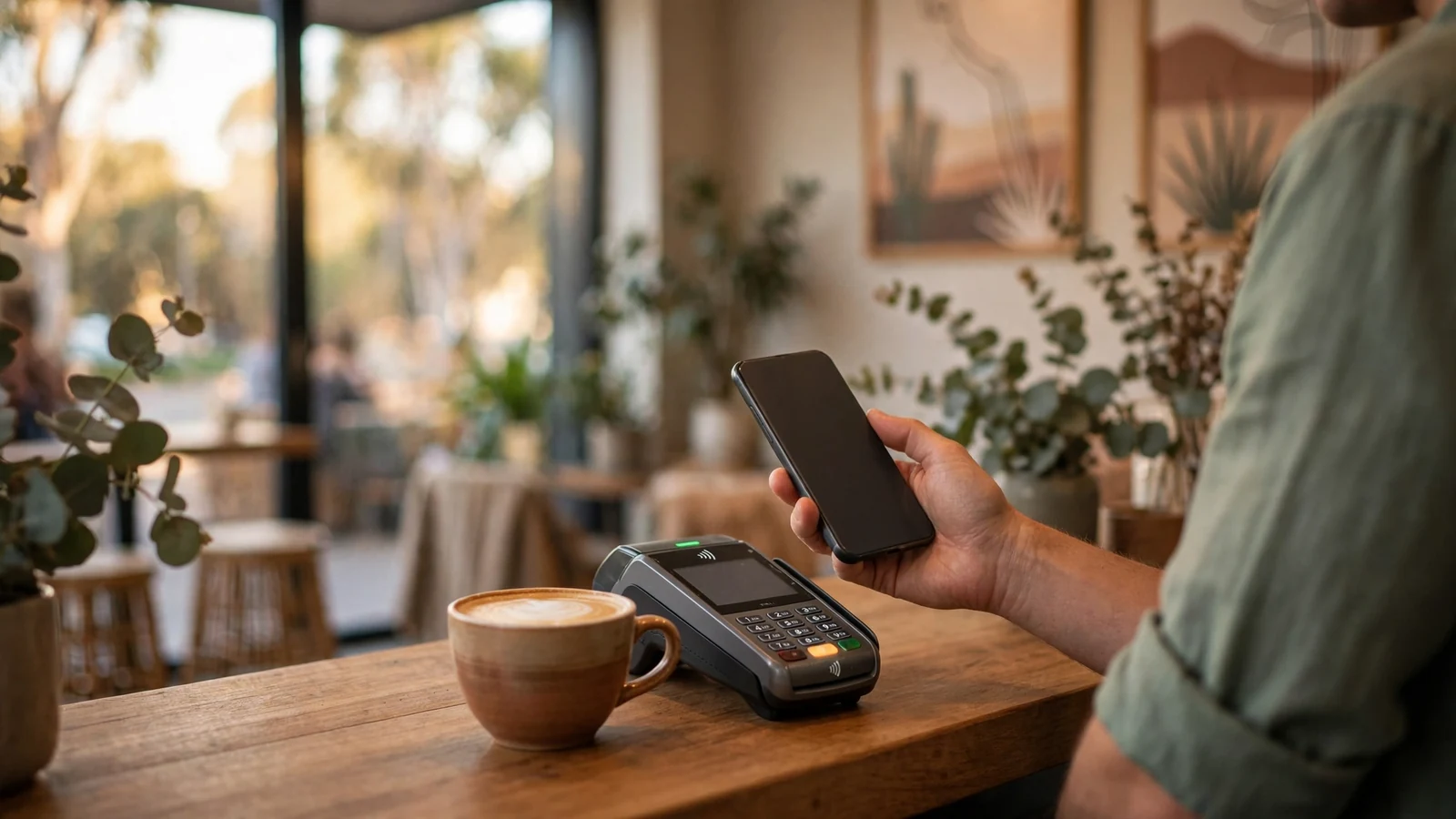
In Australia, tapping a phone to pay is an ordinary part of shopping. Mobile wallets, including Google Pay and Apple Pay, are accepted by businesses across almost the entire country. Many consumers also move between wallets, cards and bank-linked services such as PayPal without treating them as fundamentally different ways to pay. That familiarity can make it seem reasonable to expect Google Pay wherever an online payment is offered.
That expectation confuses two different kinds of acceptance. A wallet can be widely usable in everyday commerce without being available at the cashier of a particular online service. The first describes a broad pattern among Australian merchants. The second is a decision made for a specific checkout. One does not establish the other.
A useful way to understand the distinction is to treat “Google Pay is accepted in Australia” and “this cashier accepts Google Pay” as separate statements. The first concerns the general payment environment. The second concerns a particular service and the options it makes available. A familiar wallet name does not bridge that gap. Nor does the fact that a service is described as Australian or intended for Australian users demonstrate that the wallet appears in its cashier.
If you’re looking for casinos that accept Google Pay in Australia in 2026, use this list as a starting point and confirm directly with each casino whether Google Pay is currently available to you. The details below highlight the limited operator information available, rather than confirming support for that payment method.
JustCasino
JustCasino is listed with a Curacao Gaming Control Board licence. Check with the casino whether Google Pay is available for your account.
Playfina Casino
Playfina Casino is associated with Hollycorn N.V. and has a Curacao eGaming licence dating from 2017. Its minimum deposit is A$20–30, depending on the offer; confirm whether Google Pay is available to you.
LevelUp Casino
LevelUp Casino is operated by Dama N.V. under the Curacao eGaming licence OGL/2023/174/0082. Its minimum deposit is A$15; check directly whether Google Pay is supported.
Roby Casino
Roby Casino is associated with Roby Games Ltd and holds a Curacao eGaming licence. Contact the casino to confirm its current payment options, including Google Pay.
Golden Pokies
Golden Pokies is listed with a Curacao licence. Confirm directly whether Google Pay is currently available.
MrPacho
MrPacho has a minimum deposit of A$30. The stated payout times are 30–120 minutes for crypto and 24–72 hours for fiat; check whether Google Pay is offered for deposits.
House of Pokies
House of Pokies lists PayID payouts of 1–24 hours and a minimum deposit of A$30, or A$10 for PayID. Its licence is described as international, with the jurisdiction unnamed; check directly whether Google Pay is available.
DragonSlots Casino
DragonSlots Casino is associated with Jumpman Gaming Ltd and a Curacao Gaming Authority licence. Confirm with the casino whether Google Pay is among its current payment methods.
LuckyVibe
LuckyVibe is associated with Hollycorn N.V. and holds the Curacao Gaming Control Board licence OGL/2023/176/0095. Check directly whether Google Pay is supported.
Lucky Dreams
Lucky Dreams has a Curacao licence and a stated minimum deposit of A$20 for POLi. This does not confirm Google Pay availability, so check the casino’s current payment options.
The same distinction applies to searches for Australian online casinos or pokies that accept Google Pay. The wording expresses interest in using a familiar payment method, but it does not verify support at any particular site. A broad description of wallet use in Australia cannot answer a site-specific question. To establish that a particular cashier supports the wallet, you need information about that cashier, rather than an inference from how Australians generally pay.
This matters because payment acceptance is not a single, universal setting. A wallet may be available in many shops while a given online business does not offer it. Another service might display different payment choices. The general popularity of a payment method does not require every merchant to support it, and it does not make the payment method available in every type of checkout. Everyday acceptance is a context, not a promise about an individual service.
It is also easy to mistake a familiar payment logo or a general statement about digital payments for confirmation of checkout support. A wallet’s presence in the Australian market says something about consumer habits and the range of ways people pay. It does not, by itself, show which methods a particular site accepts. The key distinction is between familiarity with a payment method and evidence that a specific cashier offers it.
This is why claims about an Australian Google Pay casino need to be read narrowly. A statement that Australians commonly use mobile wallets is not the same as a statement that a named cashier offers Google Pay. Likewise, the fact that a business accepts other digital payment methods would not establish that this particular wallet is included. Payment choices are not interchangeable merely because consumers may move between them in other settings.
The word “Australian” can add another layer of ambiguity. It may refer to the intended audience, a site’s marketing, or the location of the person searching. None of those meanings confirms the payment options actually presented by a cashier. A service’s description and its payment support are separate pieces of information. A reader should not treat one as proof of the other.
There is a further distinction between the national payment landscape and the status of online gambling services. Australian consumer law does not protect players who use offshore casinos. Widespread use of a mobile wallet in ordinary commerce does not change that position or establish that an online gambling service is lawful to provide in Australia.
The practical point is simple: a wallet’s everyday reach tells you why Australians may expect to see it, but not whether a particular online cashier supports it. If you are assessing a claim about Google Pay, keep the claim tied to the specific service rather than extending it from general Australian payment habits. That avoids turning a true observation about widespread wallet use into an unsupported conclusion about an individual checkout.
A phone wallet can be familiar, widely accepted and routinely used alongside cards or bank-linked services, while still not being an option at a given cashier. Those statements can all be true at once. The national pattern describes what people can commonly do across Australian commerce; site-specific support describes what a particular checkout makes available. Keeping those meanings separate is the first step in interpreting claims about Google Pay and online casino payments without assuming that broad acceptance guarantees local checkout support.
A Google Pay deposit is not determined by the wallet’s availability on your phone alone. The payment has to pass through several separate checks: the service’s cashier must offer Google Pay for deposits, the wallet must be usable in the payment flow presented to you, and the transaction must be authorised. If any one of those conditions is absent, having Google Pay set up for everyday purchases does not complete the payment.
The first point to establish is whether Google Pay appears as a deposit option in the cashier. A logo on a general payments page, or the fact that the wallet works at Australian shops, does not show what the cashier currently permits. The option that matters is the one available in the actual deposit flow for your account and location. If it is not listed there, there is no Google Pay deposit route to proceed through, regardless of how widely mobile wallets are used elsewhere.
If an option is displayed, the next question is what the cashier asks you to do. Payment flows can differ, so do not assume that selecting the wallet will immediately submit a transaction. The cashier may present an amount field, a confirmation screen, or a step that opens a wallet interface. The relevant details are the prompts shown before you approve anything: which method is selected, what amount and currency are displayed, and whether the final screen identifies the payment as a Google Pay transaction. A label alone is not evidence that the process has reached authorisation.
This distinction matters because a deposit involves more than choosing a payment brand. The cashier controls which methods it presents; the wallet handles the payment request; and the transaction must still be approved. If the flow returns an error, closes before confirmation, or offers a different method instead, the intended Google Pay payment may not have been submitted. Treat the status shown by the cashier and the wallet as part of the process rather than assuming that opening a payment screen means money has moved.
Australian consumers encounter mobile wallets frequently: services such as Google Pay and Apple Pay are accepted across almost all everyday retail settings. That context can make the wallet seem like a predictable option wherever online payments are offered. It does not, however, determine what a particular cashier supports. Retail acceptance and an online gambling service’s payment configuration are separate systems. The deposit process has to be assessed from the service’s own displayed options, not inferred from general Australian payment habits.
There is also an account-check stage to consider. Online casinos commonly require customers to complete a Know Your Customer assessment before they carry out financial transactions. That assessment is distinct from wallet authorisation: a payment can be technically available as an option while account checks remain incomplete. The order and status of those checks can affect whether a transaction is allowed to proceed. A wallet approval therefore should not be treated as proof that the account has met every requirement for a financial transaction.
Verifying a Deposit
Check the cashier
Look for Google Pay as a listed deposit option in the actual payment flow for your account and location.
Review the prompts
Check the amount, currency, and payment method displayed on the final confirmation screen before approving.
Confirm authorisation
Ensure the transaction is authorised by the wallet and recorded by the cashier rather than just opening a payment screen.
Before any approval, read the cashier’s information about the transaction and the account. Confirm that the selected option is Google Pay, that the amount and currency are correct, and that the displayed status is clear. Do not infer a fee, acceptance, or successful completion from the wallet name by itself. Those details depend on the terms and screens presented by the service, and a payment prompt is not a substitute for understanding them.
The phrase “Google Pay deposit” can describe different stages: a method appearing in a cashier, a payment request being passed to the wallet, or a transaction being authorised and recorded. Those stages are not interchangeable. A cashier listing indicates an offered route; it does not, by itself, establish that every attempt will complete. A wallet screen indicates a request; it does not prove the cashier has recorded a deposit. To understand what happened, distinguish the method offered, the approval requested, and the transaction status reported afterward.
This explanation concerns payment mechanics, not a recommendation to deposit. Under Australia’s Interactive Gambling Act 2001, operators are prohibited from providing real-money online casino games to people in Australia. The existence of a payment option does not alter that legal position.
A statement that a casino accepts Google Pay is only useful if it refers to the service and cashier you are considering. Broad acceptance of mobile wallets in Australia does not establish that a particular online gambling site offers Google Pay. The wallet’s availability in shops or other services cannot confirm what appears in a separate online cashier.
Treat a payment claim as something to verify, not as proof of support. Look for Google Pay in the site’s own cashier and check whether it is presented as an available payment option for your circumstances. A logo or general statement elsewhere may describe a different service, may be out of date, or may not reflect what the cashier currently offers. If the cashier does not show the option, the claim has not been confirmed for that transaction.
The distinction is between a provider’s general capability and a site’s specific configuration. Google Pay can be widely accepted across Australia while a particular gambling site does not offer it. Conversely, a site might describe a wallet as supported without the option being available in every situation. The only direct evidence of the site’s stated support is its own current cashier; a third-party description cannot substitute for that check.
Read the wording of any claim carefully. “Accepts Google Pay” might refer to deposits, withdrawals, or simply a payment method mentioned on an information page. Those are not interchangeable claims. If the wording does not specify what the wallet can be used for, do not infer more than it says. A claim about deposits, for instance, does not establish that the same wallet can receive payouts.
A “best” label does not solve this evidence problem. It may indicate an editorial choice, but it cannot demonstrate that Google Pay is available in a specific cashier. Nor does a list of sites, even one presented as current, establish that each entry has been checked against the operator’s own payment information. Avoid treating rankings, badges or repeated descriptions as confirmation unless the underlying support is visible in the relevant cashier.
This matters especially when a page makes a broad claim but does not identify what was checked. Ask what the claim actually covers: is Google Pay named as an available option, and does the site’s own cashier display it? If the answer is unclear, the support remains unverified. Do not rely on a payment logo alone, and do not assume that a wallet’s acceptance by Australian retailers carries over to an online gambling service.
There is also a separate legal issue. Under the Interactive Gambling Act 2001, operators are prohibited from offering online casino games to people in Australia; the law does not explicitly criminalise players for using offshore sites. That distinction does not make an offshore service lawful to offer in Australia or make its payment claims reliable. Australian consumer law does not protect players who use offshore casinos, so a cashier display should not be mistaken for consumer protection or an assurance about the service.
A careful assessment therefore keeps three things separate: general wallet acceptance, a site’s own stated cashier support, and the legal status of the service. Only the second can indicate what that particular cashier says it accepts, and it does not establish the other two.
A payment that appears quickly after you fund an account does not establish that a later payout will arrive just as quickly. The two events move in opposite directions: a deposit sends money towards an account, while a withdrawal sends money away from it. A service may handle those directions under different rules, so evidence about one cannot confirm the other.
“Instant” also needs a precise meaning. It might describe when a cashier displays a deposit as received, rather than the full time taken for funds to become available. For a withdrawal, the same word might refer to the service approving a request, sending it onward, or the money appearing in your wallet or account. Those are different points in a process. Unless a claim identifies which one it means, it does not tell you when you can access the funds.
Google Pay appearing as a way to add money is therefore not proof that it can receive money from the same service. Even if a payment method is used on both sides, the service may treat outgoing payments differently from incoming ones. The deposit option alone cannot establish whether a payout to Google Pay is available, whether another route is required, or how long any route takes. Those details depend on the service’s stated withdrawal conditions, not on the speed of a deposit.
Identity checks can also affect when a financial transaction is handled. Online gambling services commonly require customers to pass a Know Your Customer assessment before they process financial activity. If a check is incomplete, a withdrawal request may not progress as a speed claim suggests. A statement about rapid payment handling does not, by itself, show that your account has cleared the checks or that a particular request has been approved.
Read speed statements as descriptions of a defined step, not as a promise about the whole path from request to receipt. Check whether the wording refers to approval, dispatch, or arrival, and whether it applies specifically to withdrawals through Google Pay. If it only discusses deposits, it answers a different question. If it does not state what “instant” measures, you cannot reliably infer a payout time from it.
This distinction matters when assessing claims about fast Google Pay withdrawals in Australia. A quick deposit may establish only that money was accepted on the incoming route at that time. It does not establish that the outgoing route is supported, that the request will pass account checks without delay, or that funds will be available immediately. Do not treat a deposit-speed description as evidence of withdrawal speed.
For Australian readers, there is a further boundary to keep in view: the Interactive Gambling Act 2001 prohibits operators from offering real-money online casino services to people in Australia. The fact that the law does not explicitly criminalise a player for using an offshore site does not make a payment claim reliable or provide consumer protection for that service. No speed label changes that distinction.
A search for a casino that accepts Google Pay raises a payment question, but it does not change the legal position of the service being searched for. Under the Interactive Gambling Act 2001, operators must not provide real-money online casino services to people located in Australia. The prohibition applies to services offering casino-style gambling, regardless of the payment method shown at checkout.
The law distinguishes the operator’s conduct from a player’s. It makes providing the prohibited service to people in Australia unlawful; it does not explicitly make an individual player’s use of an offshore site a criminal offence. That distinction should not be mistaken for approval, a guarantee of access, or protection if a dispute arises. The Australian Communications and Media Authority (ACMA) administers enforcement of the Act, including action directed at prohibited services.
This means a website’s claim that it serves Australians, or that it can process a payment from Australia, does not establish that its service is lawful here. A wallet is only a way to initiate or handle a payment. It cannot authorise an operator to provide a service that Australian law prohibits. Nor does a foreign licence alter the Australian rule for services offered to people physically located in the country.
There is also a practical limit to relying on an offshore provider. Australian consumer law does not protect players who use offshore casinos. If a service refuses a transaction, closes an account or fails to resolve a complaint, you cannot assume the protections and remedies available in a domestic consumer relationship will apply. The lack of player criminal liability under the Act does not remove those risks or create a local route to resolve them.
For that reason, separate three questions that can easily be blurred together: whether a site advertises a payment option, whether it can accept a transaction from you, and whether it may lawfully provide real-money casino services to someone in Australia. Evidence about one does not answer the others. A Google Pay logo or a cashier entry is not evidence of legal authorisation, and a payment that appears to go through does not validate the underlying service.
Legal Risk
Under the Interactive Gambling Act 2001, operators are prohibited from providing real-money online casino services to people in Australia, and Australian consumer law does not protect players using offshore casinos.
The relevant legal boundary is therefore about the operator’s provision of the service, not the brand of wallet used to pay. Treat payment information and legal status as distinct matters. In Australia, the fact that an offshore site appears reachable or describes itself as available to local users does not make the prohibited service lawful, while the Act’s focus on operators does not mean Australian consumer law protects people who use those services.
Google Pay describes a way to handle a payment; it does not describe what an online service offers. A mobile wallet can be used for different kinds of transactions, but its broad acceptance in Australia does not make it a feature of every website or service. Nor does seeing a wallet named alongside casino-related terms establish anything about the service’s other functions.
It helps to separate three questions. First, what payment methods does a service’s cashier present? Second, what does the service provide? Third, is that service permitted to provide it to people in Australia? These questions concern different systems. A payment option answers only the first; it does not prove what content is available or whether the service may lawfully offer it.
The distinction matters for phrases such as “Google Pay casino games” or “mobile casino with Google Pay.” They can sound as though the wallet is part of the product, when it is only a possible payment route. Payment handling and the service itself are not the same thing. The wallet does not determine the catalogue, and a catalogue does not establish that Google Pay can be used to pay.
There is also a legal boundary that payment terminology cannot change. Under the Interactive Gambling Act 2001, operators are prohibited from offering online casino games to Australian residents. The law does not explicitly criminalise players for using offshore sites, but that does not make an operator’s offer lawful in Australia. A payment method cannot confer permission, supply a local authorisation, or remove the restrictions that apply to the service.
This is why “casino payment” and “casino games” should not be treated as one claim. A statement about a wallet is a statement about a payment method; a statement about games is a statement about the service. Neither statement verifies the other. A familiar mobile payment brand may appear in many ordinary Australian settings, yet that says nothing about the legality or contents of a gambling service.
Keep the categories separate when interpreting descriptions of a casino that accepts Google Pay. The wallet is about transaction handling. The service’s activities and legal status are separate matters, and the payment label cannot resolve them.
A payment method and a game catalogue are separate parts of an online service. Seeing Google Pay mentioned in connection with a casino does not establish which games, if any, that service makes available. It only signals a claim about handling a payment; it is not evidence about the content offered after a transaction.
The distinction matters when a phrase combines Google Pay with a particular type of casino game. A cashier is designed to show payment choices, while game availability is a separate question. Neither one confirms the other. A wallet appearing in a payment description cannot verify that a particular game is present, accessible to you, or legally offered in Australia. Nor does a game-related label establish that Google Pay is accepted.
The same separation applies to promotional wording. A reference to a bonus alongside Google Pay does not prove that an offer exists, that it applies to a wallet payment, or that its conditions are suitable for you. Do not treat payment branding as confirmation of an incentive. Promotional claims require their own scrutiny, and they cannot change the legal status of a service.
That legal boundary is important here. Under the Interactive Gambling Act 2001, operators must not provide prohibited real-money online casino services to people in Australia. The law places the prohibition on operators; it does not expressly make a player’s use of an offshore service a criminal offence. This distinction does not turn a payment claim into evidence that a service is lawful or available.
A careful reading therefore keeps three questions apart: whether a service mentions Google Pay, whether it offers particular content, and whether that service may lawfully provide it to someone in Australia. Evidence for one does not answer the others. A wallet name is not a catalogue, a catalogue claim is not proof of payment support, and neither is a legal approval.
If you encounter wording that combines a wallet, a game category and a bonus, read each part as a separate claim rather than treating the phrase as one verified package. Payment support alone cannot establish game availability or the status of any associated offer.
Google Pay’s broad acceptance in Australia does not establish that an online service will send a payout to it. A wallet can be familiar and widely used for everyday purchases while still being unavailable for withdrawals at a particular cashier. Deposit support, where it exists, is not proof of payout support.
Before treating Google Pay as a withdrawal route, check the service’s own payment terms and the options shown in its cashier. Look specifically for whether Google Pay is identified for withdrawals, not merely displayed as a way to add funds. If the information only refers to deposits, it does not answer the withdrawal question. Also check any stated conditions attached to payouts; the available route may depend on the service’s rules and on checks required for your account.
Identity checks are relevant because online gambling services may require customers to complete a Know Your Customer assessment before they can carry out financial transactions. That means a wallet being available does not, by itself, establish that an account is ready to receive money. Read the service’s instructions for completing the assessment and confirm what status is required before relying on a payment option.
Do not treat a general claim such as “Google Pay accepted” as confirmation of a Google Pay withdrawal. It may refer only to payments into the account, or describe wallet acceptance without specifying transaction direction. If the cashier or terms do not clearly say that payouts can be made to Google Pay, the withdrawal route remains unverified. The same distinction applies to claims about a casino or pokies service: naming a wallet does not establish that it can receive winnings.
There is also a legal and consumer-protection boundary. The Interactive Gambling Act 2001 prohibits operators from providing real-money online casino services to people in Australia. Australian consumer law does not protect players using offshore casinos. A payment option cannot change either point, so confirming a wallet route should not be mistaken for confirming that the service is lawful or locally protected.
Contactless payment is part of everyday spending in Australia. Credit and debit cards that support contactless payments are accepted almost everywhere, and mobile wallets such as Google Pay and Apple Pay are also widely accepted. Many consumers are comfortable moving between a physical card, a phone wallet and bank-linked services such as PayPal, depending on the setting.
That familiarity can make it seem natural to expect Google Pay wherever an online payment option is offered. But a payment habit describes what people use across ordinary businesses; it does not show what a particular online service accepts. An Australian casino using Google Pay is not established simply because local shops commonly take contactless payments or because a customer already has the wallet set up on a phone.
The distinction is between broad consumer adoption and a specific service’s stated payment support. Google Pay may be familiar in Australia while its availability at any particular gambling-site cashier remains a separate matter. The same applies to cards and bank-linked services: their presence in everyday transactions cannot be treated as evidence that an online gambling service accepts them.
This matters when comparing an Australian casino with Google Pay against ordinary retailers. A retailer’s contactless terminal and an online service’s payment options are different contexts. The widespread use of wallets tells you that the technology is familiar to Australian consumers; it does not verify a site’s cashier, nor does a site’s use of the word “wallet” establish which wallet it supports.
There is also a separate consumer-protection consideration: Australian consumer law does not protect players who use offshore casinos. That point does not change local payment habits, but it means familiarity with a payment method should not be mistaken for assurance about the service receiving a payment.
In short, Australia’s strong adoption of contactless cards and mobile wallets explains why Google Pay may feel like an expected option. It cannot, by itself, confirm that an online gambling site accepts it.
The phrase “Google Pay casino” expresses an interest in funding an online gambling account with a mobile wallet. It does not establish that any particular service offers Google Pay in its cashier. Mobile wallets, including Google Pay and Apple Pay, are accepted by merchants across almost all of Australia, but broad retail acceptance is not confirmation of support by an online gambling service.
Treat each part of the payment question separately. The cashier is where you would need to see whether Google Pay is offered for a deposit. That alone would not tell you whether the wallet can receive a withdrawal, or whether a payout to it is available at all. A displayed payment option is not proof of every other function a reader might associate with it.
The phrase also says nothing about a service’s legal status in Australia. Under the Interactive Gambling Act 2001, operators must not provide online casino gambling to people in Australia. The law does not explicitly make a player’s use of an offshore casino a criminal offence, but that distinction does not make the service lawful for operators or provide Australian consumer-law protection when you use an offshore service.
So, a Google Pay label can identify the payment method someone is looking for; it cannot verify cashier support, a withdrawal route, or legal protection. Those are separate questions, and one answer cannot stand in for the others. When assessing a claim, look for what the service itself says about its cashier and payment terms, then consider the Australian legal context independently. The name of a wallet is not evidence that a gambling service accepts it or that using that service is protected under Australian consumer law.
Check the casino’s cashier for American Express as a deposit option. Some Australian online casinos accept Amex, but others do not.
Check whether American Express or your Australian bank is blocking gambling payments to that website. Either may prevent an Amex transaction from going through.
Yes, some Australian online casinos accept Amex deposits, but not all do. Amex withdrawals may also be unavailable at some casinos.
Amex deposits typically have no fee, though a casino may add a 1.5% surcharge. A 3% currency conversion fee may apply, and withdrawals may have a fee.
Amex deposits are typically free, but a casino may charge a 1.5% surcharge. Currency conversion can incur a 3% fee, and withdrawal fees may apply.