Venue listings and search results can leave key questions unanswered, including whether the gaming area is operating when you plan to arrive.
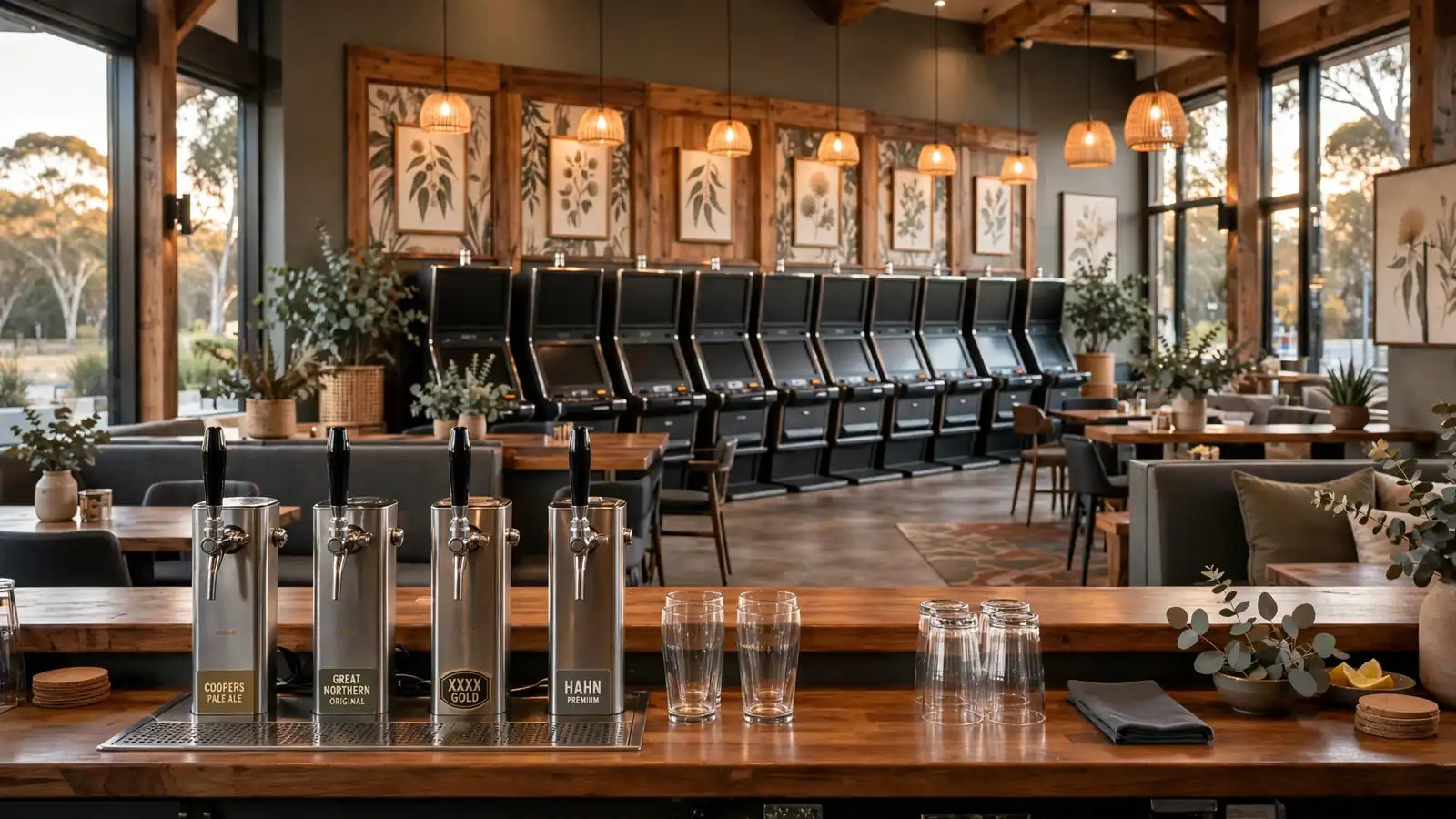
A result showing a Canberra venue as open does not establish that its pokies are available at the time you plan to arrive. A venue’s general opening hours and the hours of its gaming area are not necessarily the same thing. Before setting out, confirm both points with the venue itself.
An online listing can be useful for identifying a venue or finding contact details, but treat its status as a starting point rather than a live confirmation. Opening information may not reflect a recent change, and a page that says “open now” may be relying on published hours rather than a current check. A search result can therefore look definite while leaving the main practical question unanswered: can you enter the relevant area and use the pokies when you arrive?
When you contact a venue, ask whether the premises are open and whether the gaming area is operating at the time you expect to arrive. Asking only whether the venue is open could lead to an incomplete answer if different parts of the premises have different schedules or access arrangements.
If you are planning to arrive early or late, say so plainly and ask for confirmation of the hours that apply then. Do not infer that a venue is open at a particular time just because a result appears near the top of a page, a map shows a current status, or another page lists general operating hours. Those signals may be useful, but they do not replace confirmation from the venue.
A direct call is often the simplest way to resolve uncertainty. If you use a venue’s website or social media page instead, check that the information is current and relates to the specific venue you intend to visit. Where the answer is unclear, contact the venue before travelling rather than treating an ambiguous listing as confirmation.
A short, precise check reduces the chance of confusing general venue access with access to pokies. You can ask:
You do not need to rely on a listing’s wording if it does not answer those questions. “Open” can refer to the venue as a whole, while your reason for going may depend on a particular area being open and operating. Confirming each point separately gives you a clearer answer.
If you cannot reach the venue, avoid turning uncertainty into an assumption. A listing may still help you decide whom to contact, but it cannot confirm a live operating status unless the venue has provided that information and it is current. Consider waiting for a direct response before making a trip specifically for pokies.
Confirmation applies to the time you asked about. If your arrival time changes, or you are making the trip later than planned, check again rather than assuming the earlier answer still applies. The same principle applies if the information you find online conflicts with what the venue tells you: ask the venue to clarify which hours apply to the gaming area.
This check is also useful when several pages show different schedules. Do not average conflicting times or choose the result that looks most convenient. A venue can confirm which information is relevant to your visit. Keep the distinction clear: a published schedule describes expected hours; a direct confirmation addresses whether the venue and its gaming area will be operating when you intend to arrive.
The reliable decision point is not whether a page labels a Canberra venue “open now.” It is whether the venue confirms that the premises are open and pokies are operating at your planned arrival time. If that has not been confirmed, the status remains uncertain, so check before travelling.
Choosing pokies in Canberra means finding an online casino that suits your preferences and checking its key details before you play. Use these operator notes as a starting point for your own research.
JustCasino
JustCasino lists the Curacao Gaming Control Board as its licensing body, a detail you can factor into your checks.
Playfina Casino
Playfina Casino is licensed through Curacao eGaming under Hollycorn N.V., which has held the licence since 2017. You can expect the minimum deposit to depend on the offer, at A$20–30.
LevelUp Casino
LevelUp Casino operates under Curacao eGaming licence OGL/2023/174/0082, held by Dama N.V. Its minimum deposit is A$15.
Roby Casino
Roby Casino is licensed through Curacao eGaming under Roby Games Ltd, a key detail for you to consider when reviewing the operator.
Golden Pokies
Golden Pokies is listed as holding a Curacao licence. You can use that information as a starting point when assessing the operator.
MrPacho
MrPacho lists crypto payouts at 30–120 minutes and fiat payouts at 24–72 hours. Its minimum deposit is A$30.
House of Pokies
House of Pokies lists PayID payouts at 1–24 hours and a minimum deposit of A$30, or A$10 when depositing with PayID. Its source describes the licence as an international iGaming licence but does not name the jurisdiction.
DragonSlots Casino
DragonSlots Casino is licensed by the Curacao Gaming Authority under Jumpman Gaming Ltd. This licensing detail may help inform your checks.
LuckyVibe
LuckyVibe lists Curacao Gaming Control Board licence OGL/2023/176/0095, held by Hollycorn N.V. You can take this information into account when reviewing the operator.
Lucky Dreams
Lucky Dreams lists a A$20 minimum deposit when you use POLi. It also lists a Curacao licence.
A claim that a pokie is “best-paying” sounds like a comparison of how much players can expect to get back. To assess that claim, you need to know what is being compared: the game, its return-to-player (RTP) setting, and the conditions under which the figure applies. A game title alone does not establish its payout setting, and a payout claim does not predict what will happen during your play.
RTP describes a theoretical return across play, not a promise about an individual session. It cannot tell you what a particular player will win or lose, or when a win will occur. A result over a short period can differ substantially from a theoretical return because each spin is a separate random event.
Some game providers allow casinos to choose between multiple RTP settings for a given pokie. A specialist review has reported this arrangement; it means that the same game may be configured with different return percentages at different casinos. So a comparison based only on the game’s name can leave out a material part of the comparison.
Attention: The same pokie game can be configured with different return percentages at different casinos, meaning a game name alone does not guarantee a specific payout setting.
To interpret an RTP claim, look for the setting to which it refers and whether that setting is identified for the game being discussed. If a claim does not state the applicable setting, you cannot use it to establish that every version of the game has the same return. Nor does a figure attached to one configuration, by itself, establish the setting used elsewhere.
This distinction matters when someone describes a game as one of the best-paying pokies in Canberra. The label might refer to one configuration, while another venue could offer the same game under a different setting. Without comparable, venue-specific information about those settings, the claim does not support a reliable comparison across Canberra.
A pokie uses a Random Number Generator (RNG) to determine each spin, and each spin is independent. The result of one spin does not make a win on the next spin more likely, nor does a sequence of losses mean that a payout is due. The machine does not “remember” a player’s recent results in a way that makes the next outcome predictable.
That independence also limits what you can infer from a player’s story or a small set of results. One person may leave ahead after a short session; another may lose on the same game. Neither outcome establishes the game’s RTP setting or proves that it pays better or worse than another pokie. Short-term outcomes are individual results, not a dependable ranking method.
A meaningful ranking would need comparable information about the games and the RTP settings available at the places being compared. The game name alone is insufficient when settings may differ. A list that ranks titles without identifying applicable settings could therefore present an incomplete comparison as if it applied everywhere.
Even when an RTP setting is known, it describes a theoretical return rather than a personal outcome. It cannot tell you which pokie will produce a win during your visit, or provide a reliable ordering of what you will take home. Claims framed as “best-paying” should therefore be read as claims about specified game configurations, not predictions of results.
For Canberra, the distinction is between a documented comparison and a broad label. A ranking would need to show what was compared and identify the relevant settings; otherwise, the basis for placing one pokie above another is unclear. The word “best” cannot fill that gap. A game may have a particular published return under one configuration, but that does not establish that every installation uses it or that a player will receive that return in a session.
If a payout claim does not identify its setting and scope, treat it as insufficient for comparing games. And even a precise comparison of settings cannot predict the result of your next spin: each remains an independent random event.
A website offering real-money online pokies may look accessible from Canberra, but accessibility does not establish that the service is lawful or that you have a reliable way to resolve a dispute. Australia has no licensed online casino. Under the Interactive Gambling Act 2001, it is illegal for companies to provide real-money online casino games, including pokies, to people in Australia without a domestic licence; no such licences have been issued.
The law is directed at operators providing the service, rather than imposing a penalty on an individual player. That distinction does not make an offshore casino a protected place to play. If an offshore operator refuses to pay winnings, Australian players have no legal recourse in Australia to compel payment. A displayed balance or a stated withdrawal policy is not the same as an enforceable local remedy.
 Pokies by Region: Australian Casino and Game GuidesExplore searches for online pokies and casino options across Australian cities and regions, including live casino, keno and payout topics.
 Aussie Pokies Online in Australia: Claims and LimitsLearn what free-play results can show, why each RNG spin is separate, and how to assess online pokies, payment and bonus claims…
A withdrawal can involve more than requesting payment. A specialist review reports that casinos may require identity verification before a first withdrawal. Documents can include a photo of your identification and proof of your address; a selfie holding your identification may also be requested. Requirements differ between operators, and submitting documents does not guarantee that a withdrawal will be approved or paid.
Before providing sensitive material, consider what the request means in practice: you are sharing personal information with an offshore business, while the local legal remedy for an unpaid win is absent. Read the operator’s terms for its verification process and withdrawal conditions, but do not treat detailed terms as a substitute for Australian licensing or legal protection.
Deposit limits, loss limits and session time limits can help you set boundaries on gambling activity. Self-exclusion is another standard tool: it is intended to prevent access after you choose to stop. These measures only help to the extent that the operator implements and honours them. They do not change the legal status of an online casino or provide a way to recover withheld winnings.
BetStop has a specific limit: it applies to Australian-licensed operators and does not bind offshore sites. Because there is no Australian-licensed online casino, you should not assume that registering with BetStop will block an offshore pokie service or prevent it from contacting you. A self-exclusion request made to an offshore operator is not equivalent to coverage under BetStop.
Legal Risk
Australia has no licensed online casinos; using offshore sites means you have no legal recourse in Australia if an operator refuses to pay winnings.
The same caution applies to offers described as no-deposit play, high limits or large maximum bets. A promotion or feature label does not establish that a service is authorised in Australia, and it does not create a local dispute process. Nor does a site’s willingness to accept a visitor from Canberra show that Australian rules protect the transaction.
If you are assessing an online offer, separate three questions: whether the operator may lawfully provide real-money pokies to people in Australia, what personal documents it may demand before a withdrawal, and what practical protections would remain if it failed to pay. For offshore online casinos, the absence of an Australian licence and the lack of local legal recourse are central limits—not details that a bonus, payment option or safety setting can remove.
A place name in a search result does not establish where a pokie venue is, how far it is from your destination, or whether it lies on your route. Treat each result as a lead to verify, not as a confirmed location. This matters when you are travelling from Canberra Airport, moving through the CBD, or looking in North Canberra: a broad area label can cover more ground than a short trip suggests.
Start with the venue’s full name and street address. Check that the address appears on a current official venue page or another listing maintained by the venue. A map pin can help you orient yourself, but do not rely on a result that shows only a name, suburb, or approximate marker. If the address is unclear or different listings conflict, contact the venue and ask it to confirm the precise street address and the entrance you should use.
Next, enter that confirmed address as the destination in your mapping app. Set your actual starting point—such as the airport, your accommodation, or a particular CBD street—rather than choosing “Canberra” as a general origin. Review the route itself, not just the distance displayed beside the result. The suggested route may use a different road or mode of travel from the one you intend to take, and a location that looks close on a map may not be directly accessible from your route.
Check the place name carefully. “Near Canberra” can refer to locations beyond the city, while “near the airport” can be an informal description rather than a statement that a venue is inside the airport or immediately beside it. Likewise, a result associated with “North Canberra” does not identify a precise neighbourhood or prove that the address is convenient for your particular journey. Confirm the suburb and street, then compare the route from your own starting point.
For a stop along the way, check whether the proposed route actually passes the confirmed address. If reaching it requires leaving your route and retracing part of the journey, it may not be a practical stop even if the map labels it nearby. Allow for the route you will use, not a straight-line measurement between two points. If you are using public transport or walking, select that mode in the app; a driving route cannot tell you whether the same address is straightforward to reach on foot or by transit.
Verifying a Venue
Confirm the Address
Obtain the full street address from an official venue page and verify it via direct contact if listings conflict.
Set Precise Navigation
Enter the confirmed address into a mapping app using your actual starting point rather than a general city origin.
Review the Route
Check that the suggested route actually passes the venue and is accessible by your chosen mode of transport.
Before setting out, keep the venue’s confirmed address available and compare it with the destination shown in your navigation app. If the app resolves the venue name to a different place, use the street address and confirm the discrepancy with the venue. This process helps distinguish a genuinely convenient location from a result that is merely associated with Canberra, the airport, or the CBD. It does not establish that a venue is located at any of those places; the specific address is what needs checking.
When comparing Canberra venues with pokies, venue-level rules tell you more about how machine operations are overseen than about the machines themselves. A report by regionriverina.com.au describes two requirements affecting venues: a responsible gambling officer (RGO) must be on duty while machines operate at venues with more than 20 gaming machines, and venues must keep a gambling incident register.
The staffing requirement has a specific threshold and operating condition. It applies to a venue with more than 20 machines, and the RGO must be on duty during the period those machines are operating. It does not mean that every venue must have an RGO on duty at all times, regardless of its machine count or whether its machines are running. If you want to know whether this requirement applies to a particular venue, you would need reliable information about its machine count and operating arrangements; the venue can clarify those details.
An RGO is a dedicated role connected with responsible gambling at the venue. The requirement is about staffing during machine operation, not a rating of the venue or a measure of its pokies’ returns. It also does not establish that one venue is better than another. A larger machine area may bring this staffing obligation into play, but the rule alone does not tell you how a venue handles individual situations.
The incident register is a separate obligation. The report says venues must record occurrences, including instances where a patron’s behaviour indicates that they may be at risk of gambling harm or affected by it. This makes the register an internal record of relevant incidents, rather than a public scorecard for comparing venues. Its purpose, as described, is to capture events of concern; it does not provide a way to assess the quality, payout or fairness of a venue’s machines.
For a visitor, the practical point is that these rules concern venue responsibilities, not a promise about your experience. An RGO being on duty does not guarantee a particular outcome if you raise a concern, and an incident register does not mean that every patron interaction will be recorded. The stated requirement is to keep a register of relevant occurrences, including behaviour that indicates possible gambling harm.
If you need to raise a concern during a visit, ask venue staff how to contact the responsible gambling officer. Treat that as a request for assistance, not as a way to verify machine performance or establish that a venue is the best choice. These obligations can help explain how machine operations are overseen, but they cannot substitute for the specific information you need when choosing where to go.
Venue Obligations
Venues with more than 20 gaming machines must have a responsible gambling officer on duty during operation and maintain a gambling incident register.
A claim that a Canberra venue has “24-hour pokies” is a claim about its operating schedule, not simply about the presence of pokies. It suggests that machines can be played at any time, including overnight. Do not treat that wording as confirmation that a particular venue is open continuously or that its gaming area is available throughout the night.
Check the schedule with the venue you intend to visit. A general listing may describe the venue’s overall hours without specifying when its gaming area operates. Likewise, a venue being open does not, by itself, confirm that its pokies are accessible at that time. Ask directly whether the gaming area is open during the hours you plan to attend.
Be specific when you contact the venue. Give the day and the time you expect to arrive, especially if your visit crosses from one calendar day into another. Ask whether the gaming area will be operating then, whether access continues overnight, and whether any part of the schedule changes on the date you have in mind. A broad question about “opening hours” may receive the venue’s general trading hours rather than the information you need about pokies.
The distinction matters when interpreting phrases such as “open now” or “open all night”. “Open now” depends on the current time and the venue’s schedule at that moment. “Open all night” may be read as continuous access, but only the venue can confirm what that means for its gaming area. If a website, map listing or social post gives a schedule, check that it refers to the specific venue and the relevant area, then confirm with the venue before setting out.
If you cannot get a clear answer, do not infer overnight access from a short label or an old listing. Look for a direct contact method on the venue’s own current information, and ask for a clear confirmation of the hours that apply to your planned visit. Keep the answer tied to the date and time you asked about; a schedule can be different from the one implied by a general description.
This approach separates three questions that can otherwise become blurred: whether the venue is open, whether its gaming area is open, and whether pokies are available there during your intended visit. A “24-hour” description should not be used to answer all three without confirmation. For Canberra visitors, the reliable basis for an overnight plan is the specific venue’s current confirmation, not wording that could refer only to general trading hours.
A result that pairs Canberra with Crown Casino does not, by itself, establish that a Crown venue operates in Canberra or that pokies associated with that name are available there. Search listings can combine place names and venue names without confirming a physical connection. Treat the wording as a lead to check, not as evidence of a local venue.
Before making plans around a Crown-branded location, identify the exact venue and address through an official venue channel. Check that the address belongs to the establishment you intend to visit, rather than relying on a page title, a map label or a snippet that joins “Canberra” and “Crown”. If the venue cannot be identified clearly, do not infer that it is in the city.
Attention: A search result pairing "Canberra" with "Crown Casino" does not prove a physical Crown venue exists in Canberra.
The same distinction applies to claims about a “best pokies room” in Canberra. A search label does not verify a room, its operator or the machines it contains. Nor does it provide a sound basis for ranking rooms. The name in a result may refer to another place, an unrelated page or a broad topic rather than a confirmed Canberra venue.
A maximum cash payout is also a venue- and machine-specific detail, not something that can be established from a Crown-and-Canberra label. If a venue makes a payout statement, check what machine or conditions it refers to and ask the venue to confirm the rule before relying on it. Do not treat a headline or copied listing as a guarantee of what you could collect.
Keep venue identity separate from game performance. A brand association cannot establish a pokie’s return setting or predict what a session will pay. Each spin is an independent random event, and some providers allow different return settings for the same game. That makes a broad claim attached to a venue name especially poor evidence of a particular outcome.
For a practical check, use the venue’s own contact details to confirm its name, address and the specific facility you are asking about. If the question concerns machine availability or payout conditions, ask directly rather than assuming that a Crown reference in a Canberra result answers it. This avoids turning an unverified name pairing into a travel or spending decision.
A club’s presence in the Canberra CBD and its provision of pokies are separate details. A club name or CBD label does not, by itself, confirm that the venue has pokies. Before relying on a listing, check the club’s own current information or contact it directly and ask whether pokies are available at that specific venue.
The same distinction applies to claims about machine numbers or machine data. A figure needs to relate to the particular venue and to a stated point in time; otherwise, it may not describe what you would find there. If the number matters to your decision, ask the venue to confirm it rather than treating an undated directory entry or general description as current. Treat claims about machine settings as a separate matter: information about one venue or game does not establish the settings at another.
“Best” also needs a defined measure. A venue name, a list of machines or a favourable description does not establish that a pokie will return more to you. Each spin is an independent random event, and some providers allow different return settings for the same game. A claim about a particular venue or machine therefore needs specific, current evidence; it cannot be inferred from the CBD location.
If you are looking for support with gambling, distinguish a venue’s own self-exclusion process from online tools. Deposit, loss and session-time limits, along with self-exclusion, are responsible-gambling tools. Ask the venue directly what self-exclusion covers and how it is activated before relying on it. BetStop applies to Australian-licensed operators; it does not bind offshore sites. It should not be assumed to describe a club’s local process.
For a practical check, identify the exact club, use contact details published by that venue, and ask directly about pokies, any machine information relevant to your visit, and the self-exclusion process. Keep those answers tied to that venue: a result for one CBD club does not establish the same details for another.
A reference to Parkes alongside Canberra does not identify a particular pokies venue. It may indicate the area you have in mind, but the place name alone cannot confirm that a venue is there, that it has pokies, or where its entrance is. Treat those as separate details to check before making plans.
Start with the venue’s own current contact or location information, rather than relying on a result that displays only a name and a map marker. Check that the full street address is provided and that the venue itself uses that address. If the listing is unclear, contact the venue and ask directly whether that address is correct and whether pokies are available there. A map pin or a page mentioning Parkes does not, by itself, establish either point.
Pay attention to whether the address belongs to the venue or to a nearby landmark, office, or service area. Similar names can also refer to different places, so confirm that the information specifically relates to Parkes in Canberra, not another place with the same name. If a listing gives only a suburb or general area, it is not enough to establish the precise venue location.
You can also compare the address shown across the venue’s own information and a current mapping service. If they do not match, do not assume which one is correct; ask the venue to clarify before travelling. This check is about identifying the intended venue and its address, not about judging whether it is the best place to play.
The same care applies when looking for pokies in Canberra more broadly. A result that combines Canberra with Parkes may reflect the wording used to describe a location, rather than verified details about a specific club or its machines. Confirm the venue name and full address first, then decide whether that is the place you intended to visit.
PayID is a way to address a bank transfer using an alias rather than entering the recipient’s account details. The alias can be an email address, mobile number or ABN. PayID operates through Australia’s New Payments Platform (NPP), but that describes a transfer system; it does not tell you how a particular Canberra venue accepts payments or whether its pokies support cashless play.
Keep those arrangements separate when checking a venue. A payment method used to transfer money is not, by itself, evidence that the venue offers cashless pokies. Confirm directly with the venue which payment methods it accepts and whether they apply to gaming-machine play. Do not assume that a PayID transfer can be used at a machine simply because PayID is available through a bank.
Bank transfers can also be affected by the sending bank’s controls. A specialist review reports that some Australian banks, including major banks, occasionally block PayID transfers to gambling merchants they recognise. This is not a dependable guide to what will happen with a particular transfer: a payment may be declined, and the bank is the party to ask about its current restrictions. A blocked transfer does not establish anything about the venue’s machines or payment facilities.
If you are comparing Canberra with Newcastle, verify each place and venue separately. A reference to both cities does not tell you which venue is meant or what payment arrangements apply. Check the exact venue name and contact details before relying on a payment claim, then ask specifically whether the method is accepted for the activity you have in mind. PayID’s role as a transfer alias cannot answer that venue-level question.
Yes, you can legally play on offshore sites that accept Australian players. However, offering real-money online pokies to Australians without a domestic licence is illegal, and no such licences have been issued.
Yes, PayID is treated like any other qualifying deposit method at the recommended sites. You need to link PayID to a bank account first, and some banks may block transfers to gambling merchants.
There is no Australian-licensed online casino, so an offshore casino cannot offer you Australian licensing protection. If an offshore site refuses to pay your winnings, you have no legal recourse in Australia.
You must be at least 18 years old to gamble online in Australia.